

Sign up here to subscribe to the Grower2grower Ezine. Every two weeks you will receive new articles, specific to the protected cropping industry, informing you of industry news and events straight to your inbox.
30
Aug 2021
Aug 2021
New Zealand grown subtropicals NZGAP certified
New Route to Market
Kotare Subtropicals launches as a Multi-Site Grower from its Northland base, Kotare Farm from September, 2021.
Bananas, Pineapples, Mangoes, Papaya, Custard apples and others are being grown in New Zealand on an increasing scale. Until recently these were mostly sold at farmers’ markets, and gate stalls. Now supermarkets are beginning to stock locally grown bananas and sugar cane. We soon expect NZ grown pineapples and other tropicals and subtropicals to be on sale.
New Route to Market for growers of Subtropicals
Subtropical fruit growers who meet certification requirements of New Zealand Good Agricultural Practice (NZGAP) can now sell to wholesalers and retailer via the Multi-Site Grower option (see The Orchardist July, 2021 issue). The newly launched Kotare Multi-Site Grower is NZGAP certified for domestic marketing of New Zealand grown subtropical produce. Kotare, operated by Roslyn Norrie and Geoff Mansell was certified as a Multi-site Grower earlier this year. Kotare represents growers of subtropical fruits, and brings together growers who previously operated by direct selling at farmers markets. Kotare is making sustainably grown and harvested subtropical produce more available for consumers in a wider range of retail outlets. Kotare welcomes new growers to join its Multi-site.

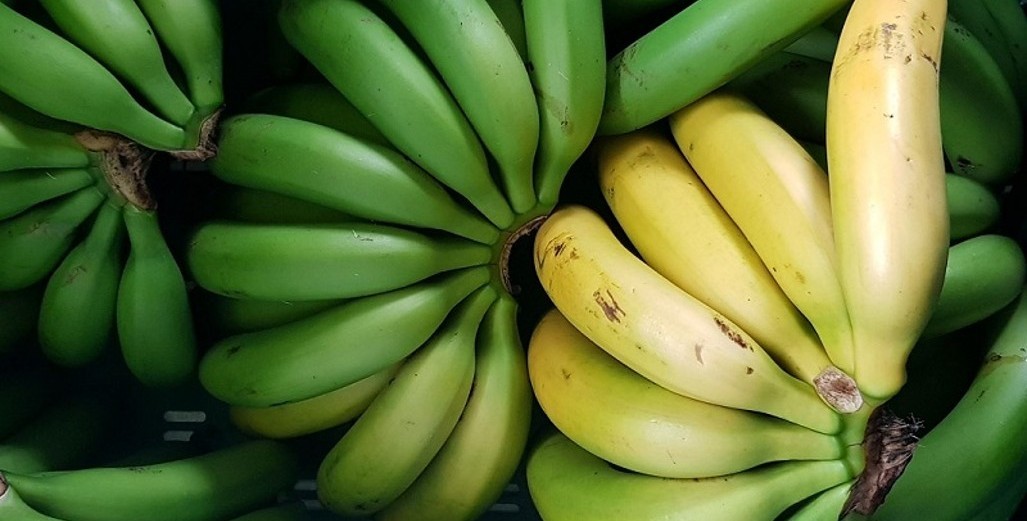
Figures 1 & 2 Lady Finger types of NZ grown bananas
Supply To Supermarkets and other Retail and Wholesale Outlets
Replacing imports with domestic produce reduces NZ’s import dependency, carbon footprint and improves food security. The areas in NZ capable of growing subtropicals are expanding, enabling new land use opportunities for regional development and employment. With our locally grown bananas and pineapples which ripen naturally, unlike imported fruit ours are grown without sprays or fumigants.
In NZ many different banana varieties are grown, some are citrusy, others creamy-tasting and although smaller they are a convenient size for schoolbags and lunch boxes. People who previously avoided large bananas to limit their carbohydrate intake can now choose the smaller, flavourful fruit for fuel and energy. Likewise, locally grown pineapple types range from a smaller and more tender Queen (see The Orchardist May, 2021) through to the larger more acidic Red and Cayenne type pineapples.
Indoor Growing in Marginal areas

During October 2020 Mathew Bergersen commenced an indoor grown banana trial in his Bay of Plenty greenhouses previously used for cut flower production.
Mathew Bergersen Banana Indoor Growing Trial – fully covered unheated greenhouse, Bay of Plenty 2021

Figure 4 Raja puri type Figure 5 Dwarf Cavenish Figure 6 Dwarf Cavendish
emergent bananas
Kotare is selling its fresh Northland bananas in supermarkets. For many years NZ grown subtropical fruits have been sold from farmstalls and at Farmers’ markets. These markets are not always convenient for busy consumers who prefer one-stop shopping. Unless growers sell their own fruit at farmer’s markets they require Food Act registration whereas produce sold via supermarkets and wholesalers requires NZGAP endorsement.
Kotare operates in a social-practice framework and provides best practice for subtropicals’ growing and marketing. NZ grown pineapples and papayas are the next step in Kotare’s launch of a range of NZ grown subtropicals into supermarkets.
Below are photographs illustrating three different types of Bananas currently on sale through NZ supermarkets.

Fig 7 (above) Goldfinger type

Fig 8 (above) Cavendish type

Fig 9 (above) High Noon type
Article supplied by – Roslyn Norrie & Geoff Mansell
Photos – Geoff Mansell and Mathew Bergersen
For further information contact:
Roslyn Norrie 021838104 Geoff Mansell 0274347041
roslynnorrie@gmail.com Geoffrey_mansell@yahoo.co.nz
CLASSIFIED











Subscribe to our E-Zine
More
From This Category

October 20, 2026
Powerplants – Purpose built facility will support leading research in crop production
The University of Tasmania is investing in the future of Australian agriculture with the development of a state of the art research greenhouse complex at its Newnham Campus in Launceston.
August 25, 2026
EPA seeks feedback about treated seed
The Environmental Protection Authority (EPA) is asking for feedback on a proposed group standard for treated seed.
August 25, 2026
A Well-Deserved Thank You to Barry O’Neil
Eight years at the helm of TomatoesNZ recognised with Lifetime Achievement Award. At the recent Covered Cropping NZ Conference and TomatoesNZ AGM, Barry O’Neil was presented with a Lifetime Achievement Award in recognition of his outstanding contribution to TomatoesNZ and the wider covered cropping industry. The award also marked the end of an eight-year chapter, with Barry stepping down after eight years as Chair of the TomatoesNZ Board.
August 11, 2026
CO₂ Capture for Greenhouses Without Liquefaction —
How Galloxol® Changes the Economics
July 14, 2026
More air movement, fewer gaps, more energy savings
"The major challenge in the energy transition is to continue growing healthy and vital crops with less energy"
July 13, 2026
Covered Cropping NZ Conference: A Day of Practical Learning and Industry Connection
Wednesday, 12 August, at LaValla, Tuakau, South Auckland
CLASSIFIED