

Sign up here to subscribe to the Grower2grower Ezine. Every two weeks you will receive new articles, specific to the protected cropping industry, informing you of industry news and events straight to your inbox.
8
Feb 2018
Feb 2018
Bacterial Canker Re-visited
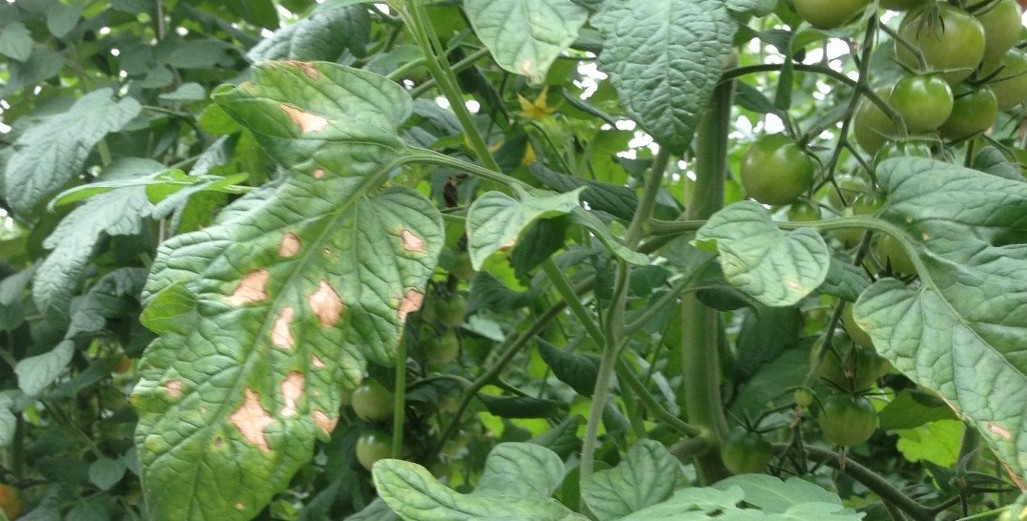
BACTERIAL CANKER: TOMATOES
I wrote an article in 2012 regarding Bacterial Canker. We have had extreme temperatures over the country this Summer so far, it is a great article to remind growers of the dangers of Bacterial Canker
With low prices about to hit the summer crops because of plentiful supply It’s hard to justify the upkeep of the plants because the returns are so low at this time, but the driving force or motivation is that the prices in Autumn will lift, so attention to the crop in the Summer is important. In February 2017 I came across a property in Pukekohe which had suspected Bacterial Canker. This crop was changed in June/July of 2017 but not before well over 34-50% of the crop was lost by that time. Prices at that time were very good so this had a large financial impact.
There are two approaches you should take once identifying you potentially have Bacterial Canker. First you need to put measures in place to reduce the losses from the disease until the current crop cycle is finished and the second is to start to prepare for your clean up and disinfection before your new planting.
.JPG)
Photo I have taken of plant with suspected signs of Bacterial Canker
Bacterial Canker may be spread via sap to sap transfer. By hand, clothing and equipment are the means it is most probably spread.
 Below are some things I would do once I suspect I have Bacterial Canker.
- Rope of the row with tape so only authorised staff can enter
- Allocate one staff member to work on this row or rows. (If possible at the end of the day) Hopefully this staff member can carry out the entire tasks required including picking.
- Wear protective coverings when working in these areas, gloves, overcoats and cover shoes. Hang up overcoats at the end of the rows and change gloves cover shoes regularly. Hang a hand gel at the start of the row so workers are reminded to keep their hands clean. Stress the importance to staff for wearing clean clothes each day!!
- Make sure any equipment (trolleys or clippers etc.) are used in this area stay in that area. I would cut out infected plants and place into sealed rubbish bags and remove from the greenhouse.
- When working on the top of your plants dip your hands between each plant in a solution which will kill bacteria.
- I sprayed my paths where I walked with a 1 to 2 per cent solution of Sodium Hyper Chloride making sure the vents were fully opened and that I did not get any spray on the plants.
Suggestion:
Humidity can be your friend in the summer and especially if you don’t have grafted plants. For example, tomatoes which are 6 months or older and are struggling in the summer months, reduce your wind side vent to trap in humidity (during the day), this could increase temperatures but your plants will be thanking you because there will be humidity around the head of the plant so they will be keeping up with the workload so to speak.
There is an extremely lot of work to be done at crop change, but you must be extra vigilante if you have had a suspected outbreak of Bacterial Canker in your previous crop. Below are a few suggestions.
- Either completely remove the infected crop from your property or bury or burn the crop depending on your circumstances
- Remove all substrates from the greenhouse including all loose plastic. Remove from your property.
- Totally clean any remaining organic matter out of your greenhouse before washing down.
- All irrigation lines should be flushed before removing and dipping in large baths filled of an anti-bacterial solution and then re flushed when they are placed back in the greenhouse
- The greenhouse once washed downed and emptied needs to be thoroughly sprayed, more than once if possible with strong anti-bacterial solutions which I can advise on.
- Do not use old hooks or string, replace if possible.All equipment needs to be thoroughly cleaned and sprayed before returning to the greenhouse.
If you have any enquires about this article and any advice you could need please feel free to get in contact with me via the commercial grower section. Or send a question via the contact us page.
Article wrtten by Stefan Vogrincic Grower2Grower
CLASSIFIED












Subscribe to our E-Zine
More
From This Category
March 10, 2026
Australia’s horticulture sector has delivered a year of record‑breaking performance
Highest production value to date of $18.4 billion, up 6% on the previous year.
March 10, 2026
Energy saving through screens
A combination of screen use, screen quality, greenhouse climate requirements, and greenhouse equipment.
March 10, 2026
Heating Uncertainty Leaves Greenhouse Growers Searching for Answers
Waste oil supply changes force growers to reconsider long-term heating options ahead of winter. Two weeks ago I was alerted that one of the major recycled waste oil suppliers, based in the Auckland region, will soon stop supplying greenhouse growers. For one of my customers this came as a significant shock, particularly given that notice was given that deliveries will cease in the coming months –

February 10, 2026
MG Group partners with The Gut Foundation
Growing a healthier New Zealand together
January 27, 2026
Protected Cropping, Weather Extremes And Growth Potential
Extreme weather again highlights the role of protected cropping. During last week’s deluge across the North Island, significant damage is expected across many outdoor crops. Onions lying on the ground and attempting to dry will be particularly vulnerable, with prolonged saturation likely to result in quality losses and storage issues.
CLASSIFIED