

Sign up here to subscribe to the Grower2grower Ezine. Every two weeks you will receive new articles, specific to the protected cropping industry, informing you of industry news and events straight to your inbox.
12
Mar 2018
Mar 2018
Collaboration
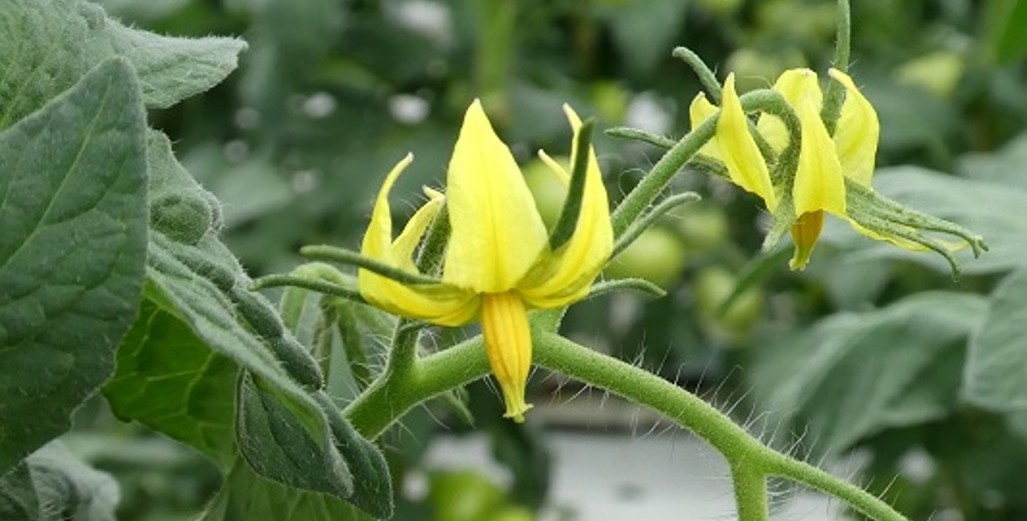
Collaboration. How information sharing could benefit growers
I recently read an article, which had an interesting message, I wanted to explore further. It posed a statement along the lines of, if you had 10 growers all in the same area, growing exactly the same crop, on the same growing media you would get 10 different results!
I agree with that statement and here is my take:
No one knows the exact answer! Growing perfection is reliant on technology and the grower’s ability to implement technology with their growing skills and beliefs.
As growers we work within parameters. For instance, tomatoes can produce adequately in a large range of water content, fertilizer, Co2 and temperature levels. What we do know is that by monitoring, and with the knowledge we have, we narrow these parameters to lift the probability of increased success. Refining and ‘squeezing’ every last ounce of potential out of a crop is what we all want to achieve. Twenty years ago, a very intelligent consultant said “Stefan you are starting with 75kg m2 potential, if you end up with 60kg per m2 you’ve lost 15kg per m2 somewhere!”. I never achieved 75 kg m2!
Today tomato growers use more advanced technology and new technically advanced varieties are producing 75 kg per m2 but the crops potential could be 100 kg or more, no one really knows. Technology advances such as lighting, diffused glass or semi-closed greenhouse systems are increasing yields, environmental computer systems are extremely good, as are energy systems and our knowledge keeps improving.
In my time, in the horticulture industry, I have not seen an identical operation anywhere in the world. There are far too many variables. This is one of the reasons why consulting is a challenge, you have to work with whatever system and beliefs each grower has, not to mention different greenhouse structures, layouts and locations. Companies that are performing well still use consultants because they want to maintain their high yields and try to find extra improvements. I am definitely not perfect and never will be (my wife will tell you that!!) but knowing that is an asset because I want to continue to improve.
The continual need to improve is natural but how do we achieve this? Recently I was at a seminar held by the accountancy firm I use. It was in regards to ‘growing your business’. I took several key messages away from the seminar with one key suggestion that just keeps churning away inside my head, “don’t be afraid to talk to your competitor and share information as this is a great way to learn”. Collaboration.
I have a very competitive nature, what drove me as a grower was producing higher yields each year. In sport, when you are on the same team to beat your opposition you must work together and the only way to do that is to share information. My growing knowledge improved 100% when I became part of a grower discussion group. The expression “anti-competitive behaviour”, is something you could be thinking and that is a fair point and is a consideration. Grower groups are common practice in Holland, and they have been one of the driving forces behind innovation in the greenhouse industry.
New Zealand horticulture, no doubts in my mind, could have a huge role in creating employment and wealth. We have everything here we need to be a world leader. Greenhouse growing will become more important. Collaborating and working together, while still making a living, is a challenge but is achievable. We are all different, grow differently and as is written in the article I quoted at the beginning 10 different growers with the same crop in the same area will always have different results but working together will improve every one’s chances of success.
I appreciate your comments. Please feel free to comment below or on the grower2grower Facebook page:
https://www.facebook.com/StefanGrower2grower/
Article written by Stefan Vogrincic
CLASSIFIED










Subscribe to our E-Zine
More
From This Category
April 20, 2026
The Environmental Protection Authority (EPA) has approved a new fungicide seed treatment to control disease on potatoes.
The New Zealand potato industry is valued at approximately $1 billion annually, according to Potatoes New Zealand.
April 20, 2026
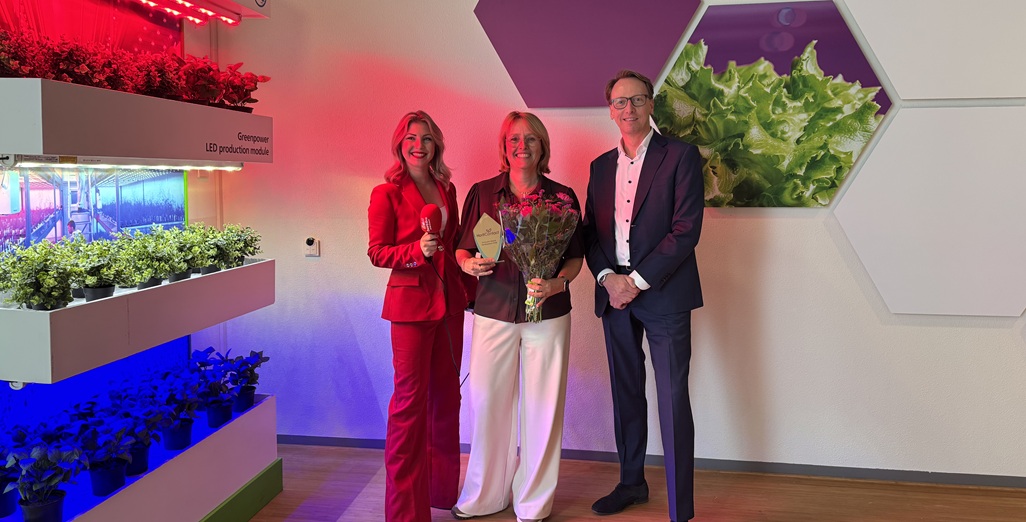
Signify wins HortiContact Innovation Award for Philips intelligent horticulture lighting solutions
“We are incredibly proud of this recognition”
April 7, 2026
Proposed import requirements for fresh blueberries (Vaccinium spp.) for human consumption
Make your submission
March 23, 2026
The Environmental Protection Authority (EPA) maintained the upward trend for hazardous substances decisions in the second quarter of the 2025-26 year.
Dr Lauren Fleury, Manager Hazardous Substances Applications, says the EPA continues to use rapid assessment pathways where possible. Of the 16 approved applications in the second quarter, 13 were decided by rapid assessment.
March 23, 2026
Source Advances Harvest Forecasting for Tomatoes with Next Generation AI Model
Fundamental changes to how the model learns and handles grower input mean significantly less manual work and meaningfully better accuracy.
March 10, 2026
Australia’s horticulture sector has delivered a year of record‑breaking performance
Highest production value to date of $18.4 billion, up 6% on the previous year.
CLASSIFIED