

Sign up here to subscribe to the Grower2grower Ezine. Every two weeks you will receive new articles, specific to the protected cropping industry, informing you of industry news and events straight to your inbox.
25
Sep 2018
Sep 2018
Production Pitfalls (Part 3)
Nutrient Challenges and Gummy Stem Blight
The third in this series of technical articles supplied by Paddy de Vries. Timely reminder for GummyStem Blight as I have seen it in the past week. Perfect conditions for it at the moment. Spring is here and we are in transition from Winter but the nutrient advice below still applies.
Nutrient Challenges
During the cooler months, where the ambient air and foliar temperature as well as root-zone temperature is cooler and light (quality and quantity) may be deficient, nutrient problems (visually “pre-symptomal”) often occur.
During cooler root conditions, many nutrients are taken up less efficiently than during optimal root temperatures. While e.g. Potassium uptake is reduced, Nitrogen uptake is hardly affected. The net result is that the N:K ratio is skewed towards a less than optimal K value.
N:K ratio should be adapted for cooler weather, increasing Potassium (1st check analysis). However, root K levels should be monitored carefully since this mineral can, if allowed to increase too high, depress the uptake of other critical nutrients
Potassium plays a major role in taste of fruit such as tomatoes. Some cultivars, especially vegetative types may require a substantial increase of K.

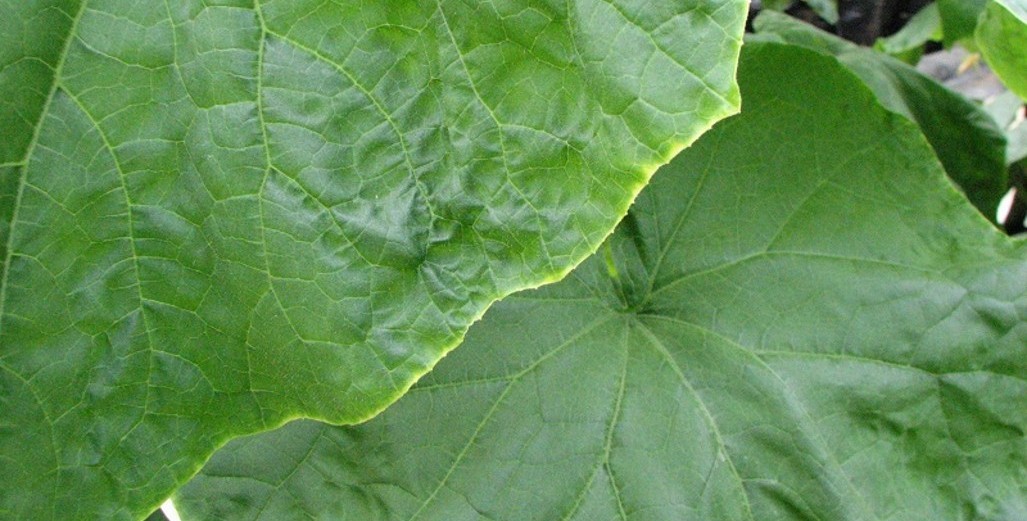
If symptoms are already visible or the fruit taste has already been affected by the cooler climate and poor light & shorter days, increase K in the fertigation mixture along with an increased EC. (photo above with K deficiency)
Phosphate uptake is drastically reduced by cold roots. P is involved in critical processes including energy transfer, photosynthesis, nutrient movement and transformation of sugars and starches. At <13°C root temperature, P uptake may be inhibited by as much as 30%. The application of extra P in the nutrition will help, but the roots remain cold and uptake is still slow.

If acids Sulphuric or Nitric acid is used for pH control, replace a portion (must be calculated on N, P and bicarbonate levels) with Phosphoric Acid
Foliar application of a P containing product can be extremely beneficial in cold weather. Using products that contain both P and K (no or insignificant N) along with trans-cuticle transport additives and organic chelates will be a distinct advantage.
Cucurbits: Gummy Stem Blight (GSB) – Didymella bryoniae
Following on from my article in April, Paddy’s article gives added technical advice: news/post/gummy-stem-blight–didymella–is-currently-affecting-some-growers/
Identification:
Leaves, stems and fruit can be affected. Leaf margins normally first show signs of infection: displayed as v-shaped zones of chlorosis. Leaf symptoms can be exhibited within the lamina of the leaf, sometimes incorrectly identified as Downy Mildew (Pseudoperonospera cubensis). While Downy Mildew exhibited as angular areas mostly within leaf veins, the GSB spreads over veins and is less angular. The GSB symptoms progress to become necrotic areas of dead tissue that turn brown and have a yellow halo around the necrotic parts. Close to the ground/medium level, the stems exhibit areas appearing dry and cracked with tan coloured corky lesions. Within these lesions black fruiting bodies and beads of an amber exudate can be seen. Fruit may also exhibit corky lesions with concentric rings and fruiting bodies (e.g. squashes). Cucumber fruit will exhibit thinning of the flower end, often with black fruiting bodies on a larger than normal calyx scar. The fungus can completely decimate the stems and the plant withers and dies. Symptoms normally appear at or after first harvest when the plants may be weaker due to metabolites being sent to the main metabolic sink(s), the developing fruit, and plants are more susceptible to attack

Above and below are picutes of GSB in the early and more advanced stages in the base of the stem..jpg)

Photo above of the GSB further up the stem. This was probably infected from an open wound. Below a good illustration of GSB on the leaf.
Prevention
Gummy Stem Blight infections occur when fungal spores are present on susceptible areas or lesions on the plant, due to optimal conditions for the infection process to occur. During periods of high humidity, free water present on plant parts (e.g. plant temperature below dewpoint temperature), wet conditions and temperatures averaging 16-21 °C (typical in the early morning autumn, winter and spring greenhouse), the fungal spores bloom.

I have definitely seen this in the past week (NZ). With the wild weather, as it is at the moment, I expect to see more of this if you don't take precautions. Didymella is not totally avoidable. I like how this shows the spores on the flower, this is how it starts and transfers into the fruits causing the rot. 
A sequence of management plans must be initiated to control Gummy Stem Blight (GSB):
- Seed: One source of GSB inoculum could be seed. Purchase seeds from reputable companies with a good history of GSB-free seed production. Genetic GSB-resistant varieties are not currently available in any cucurbits to my knowledge. Some varieties however will be less susceptible to infection, and companies will refer to them as “strong against….”, but will not claim resistance.
- Transplants: GSB is common at the seedling stage and displays one or more of the characteristic symptoms (chlorotic and necrotic areas on the margin of the leaves, water-soaked regions on the stem, gummy ooze from the stem). Growers should regularly inspect transplant seedlings in the greenhouses. Whenever possible, avoid using healthy-looking seedlings from trays with infected plants. This is true for all diseases.
- Organic debris: Another source of primary inoculum is organic debris from previous cucurbit crops. As soon as a cucurbit crop is harvested (especially crops with GSB inoculum), the decaying debris from that crop should be destroyed. Botrytis has the same danger of being re-infected from plant debris.
- Volunteer plants: Many weed species and wild or volunteer cucurbits are other sources of inoculum and should be eradicated before planting the crop.
- Crop rotation: Even though not practical in greenhouse / nursery situations, a two- to three-year rotation with non-cucurbits is an effective way to reduce incidence of GSB. Utmost care should therefore be taken in removal and destruction of all the infected material and post-harvest or pruning material. Where soil is the root medium, ensure that the soil is inoculated with suppressive beneficial organisms or apply chemicals within the relevant legal framework of your country or export destination market
- Scouting: Routine scouting of the fields helps in timely application of fungicides or beneficial organisms that can prevent major crop losses.
- Biological control and bio-pesticides: The effectiveness of bio-control agents currently available in the market is heavily dependent upon environmental conditions at the time of application and therefore often show varied results in the prevention & control of GSB. Time, type & mode of application is critical.
- Fungicide application: When conditions favor the disease, preventative fungicides should be applied within legal constraints.
- Storage: GSB infection & spread can also occur on the fruit post-harvest. Avoid wounding fruits during harvest, and store fruits at 10°-12°C to prevent postharvest infection and growth. (Confirm specific optimal conditions for different spp.).
Treatment
Chemical & Other Control
- Fungicidal treatment, both preventative and curative should be done within the legal framework of the local and destination market.
- Plants can be sanitized with “QAC’s” where legally permissible.
- Remove infected material as per Botrytis and treat soil if legally permissable.
Paddy de Vries a hydroponic specialist in South Africa will be visiting New Zealand in October. Paddy has been in the South African covered crop industry since graduating from The University of Stellenbosch in 1987 with a BSc Agric and 2 BSc Hons. degrees. He has vast experience and has supplied me with insights into the South African greenhouse industry. Paddy wrote an excellent newsletter regarding 'production pitfalls'. Paddy has allowed Grower2Grower to publish this newsletter in a series of articles. The technical nature of the articles is relevant and applicable for NZ growers. In this edition, Paddy will focus on Gummy Stem blight and nutrient problems.
“The best approach to preventing a problem from taking hold, and painstaking process of ridding the crop of the malady is a three-pronged approach: Identification, prevention and, unfortunately for those infected, treatment” Paddy de Vries.
Article content “Brought to you by Intens Agri Hydro” For more information, feel free to contact Paddy de Vries or Liandra von Below de Vries at: Liandra.vonbelow@gmail.com or telephone +2783 420 1392
I appreciate your comments. Please feel free to comment below or on the grower2grower Facebook page:
https://www.facebook.com/StefanGrower2grower/
Article formatted by Stefan Vogrincic, Consultant, Grower2Grower
CLASSIFIED











Subscribe to our E-Zine
More
From This Category
April 20, 2026
The Environmental Protection Authority (EPA) has approved a new fungicide seed treatment to control disease on potatoes.
The New Zealand potato industry is valued at approximately $1 billion annually, according to Potatoes New Zealand.

April 20, 2026
Signify wins HortiContact Innovation Award for Philips intelligent horticulture lighting solutions
“We are incredibly proud of this recognition”
April 7, 2026
Proposed import requirements for fresh blueberries (Vaccinium spp.) for human consumption
Make your submission
March 23, 2026
The Environmental Protection Authority (EPA) maintained the upward trend for hazardous substances decisions in the second quarter of the 2025-26 year.
Dr Lauren Fleury, Manager Hazardous Substances Applications, says the EPA continues to use rapid assessment pathways where possible. Of the 16 approved applications in the second quarter, 13 were decided by rapid assessment.

March 23, 2026
Source Advances Harvest Forecasting for Tomatoes with Next Generation AI Model
Fundamental changes to how the model learns and handles grower input mean significantly less manual work and meaningfully better accuracy.
March 10, 2026
Australia’s horticulture sector has delivered a year of record‑breaking performance
Highest production value to date of $18.4 billion, up 6% on the previous year.
CLASSIFIED