
Sign up here to subscribe to the Grower2grower Ezine. Every two weeks you will receive new articles, specific to the protected cropping industry, informing you of industry news and events straight to your inbox.
8
Sep 2020
Sep 2020
The Organic Products Bill

By Dr Mike Nichols
I spent several hours recently watching on zoom one of the two select committee meetings receiving oral submissions from interested parties on the Organic Products Bill. It was only the second select committee I have ever contributed to or watched. The previous one was in relation to medicinal cannabis. My immediate reaction was that a zoom presentation is a poor substitute for a face to face presentation to the committee in a room in parliament, and the second conclusion was what really was the point of having such a procedure, when many of the inputs were emotive in the extreme, and not really critically examining the substance and workability of the bill.
In my submission I expressed concern about the need for such a bill when the organic system, and the GAP system were slowly starting to converge. The cost of running two similar but subtly different systems in a small country such as New Zealand was debatable.
Over the past 20+ years a safe food strategy for agriculture has been developed world-wide called GAP (Good Agricultural Practice). This was established as a tracing tool, so that any problem of quality control could be traced back to the original grower. GAP (now called Global GAP) has a New Zealand equivalent (NZ GAP), which contains the majority (but not all) of the same aspects of organic certification schemes. The question to me is do we require an additional bureaucracy, which will require additional costs. GAP is extremely holistic and includes such important aspects of production as concern for the natural environment, safe use of pesticides, personal hygiene, and food safety. In fact, much more so than any current organic certification system. Organic systems are slowly trending towards GAP, and GAP is slowly trending towards organic systems, with currently the major difference being that the use of “artificial fertilizers” and “artificial pesticides” is not permitted in organic production.
Regarding the content of the Bill itself, I have little to comment, except that the “devil is in the detail”.
The devil in this case is the word “standard” (Clause 105).
One glaring example is that the bill does not consider the key definition of organic standards.
Whose standard will New Zealand use? Who decides on the standard?
There is no single organic certification system world-wide. Each country controls its own organic standards, for example EU has a set of standards, and these require that the plants are grown in soil, which is in direct contact with the earth, whereas Canadian standards allow plants to be grown in soil in pots, and USA permits the use of hydroponics—provided that the nutrients are organically derived. I am unclear where UK will be in the future due to Brexit. The International Federation of Organic Agriculture Movements (IFOAM), is a (self-appointed?) international umbrella organization for organic farming organization established in 1972 and prohibits the use of hydroponics. Thus, the water is very muddy.
It is also abundantly clear that many people do not understand what organics really means. In a survey carried out some 20 years ago it was found that the main purchasers of organic products were affluent upper- and middle-class home makers (usually female) who purchased organic products because it was considered to be safer from pesticide residues etc. In my experience the situation has not changed.
Will imported organically certified products from other countries be allowed to be sold as organically certified within New Zealand even though their standards are different from the New Zealand standard? How will the New Zealand consumer be able to differentiate?
Will it be possible for a New Zealand producer to grow organic produce in New Zealand and have it certified (for example) under a USDA standard?
There is little doubt that the Soil Association was ahead of its time in promoting the value of organic manure to retain soil structure, water holding and nutrient conservation, and that the use of synthetic pesticides could provide both an economic advantage and a biological risk. These dangers were amply demonstrated by Rachel Carson in her 1962 book “Silent Spring” which eventually has led to development of Integrated Pest Management (IPM) systems.
No horticulturist would disagree with the importance of organic matter in the soil, but the real problem for the future will be sustainability. Sustainability (and its close cousin regenerative agriculture) are current “buzz” words, with little relationship to reality. When we grow plants in the soil, they require nutrients in order to grow. New Zealand is an exporter of food, and fibre, all of which results in a loss of minerals (N. P, K, in particular). Nitrogen we can produce locally via legumes or from the air, but phosphorous and potassium must be imported. New Zealand soils are also lacking in certain trace elements, particularly selenium (on the pumice soils), and boron on other soils. Thus, we continually deplete the nutrients in the soil when we export the produce and even if we consume the products within the country the bulk of the minerals find their way eventually into the sea via the river systems. Thus, there is a continuous and inevitable loss of nitrogen, phosphorous and potassium from the soil. Although some of the nitrogen can be replaced by growing legumes, the other minerals can only be replaced by applying fertilizer. Clearly it is extremely difficult, (if not impossible) to grow vegetables for sale off the property without importing these minerals, in some form or other. Bringing in organic matter from another property is simply robbing Peter to pay Paul. Of course, the long-term future is that we will eventually run out of fertilizer—as there is only a finite amount of phosphate rock in Morocco, and Potassium salts in Belarus!
In the long run I suspect that high value horticultural crops will be grown using recirculating hydroponic systems, not only to conserve fresh water and nutrients, but also to reduce pollution in rivers and lakes.
Article written and supplied by Dr Mike Nichols
.JPG)
CLASSIFIED



Subscribe to our E-Zine
More
From This Category
April 20, 2026
The Environmental Protection Authority (EPA) has approved a new fungicide seed treatment to control disease on potatoes.
The New Zealand potato industry is valued at approximately $1 billion annually, according to Potatoes New Zealand.
April 20, 2026
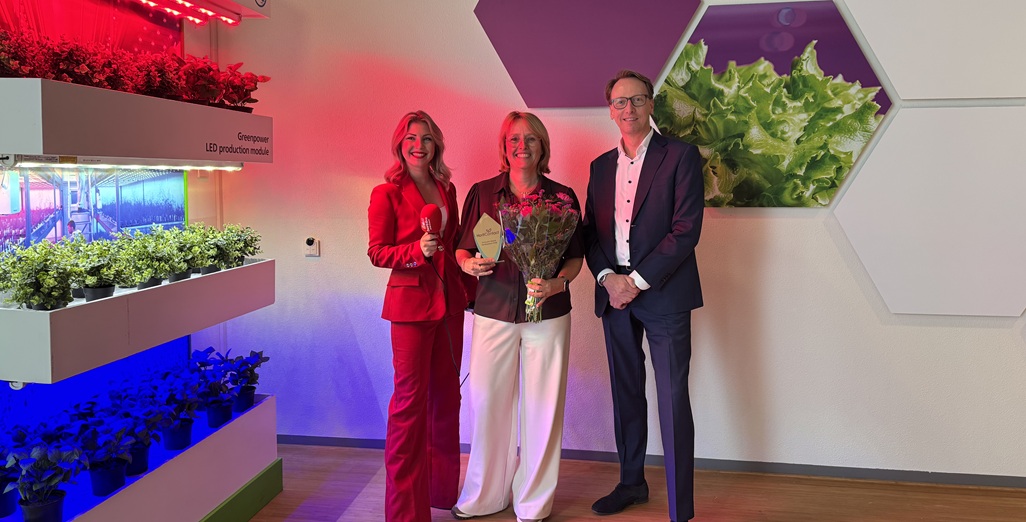
Signify wins HortiContact Innovation Award for Philips intelligent horticulture lighting solutions
“We are incredibly proud of this recognition”
April 7, 2026
Proposed import requirements for fresh blueberries (Vaccinium spp.) for human consumption
Make your submission
March 23, 2026
The Environmental Protection Authority (EPA) maintained the upward trend for hazardous substances decisions in the second quarter of the 2025-26 year.
Dr Lauren Fleury, Manager Hazardous Substances Applications, says the EPA continues to use rapid assessment pathways where possible. Of the 16 approved applications in the second quarter, 13 were decided by rapid assessment.
March 23, 2026
Source Advances Harvest Forecasting for Tomatoes with Next Generation AI Model
Fundamental changes to how the model learns and handles grower input mean significantly less manual work and meaningfully better accuracy.
March 10, 2026
Australia’s horticulture sector has delivered a year of record‑breaking performance
Highest production value to date of $18.4 billion, up 6% on the previous year.
CLASSIFIED