Sign up here to subscribe to the Grower2grower Ezine. Every two weeks you will receive new articles, specific to the protected cropping industry, informing you of industry news and events straight to your inbox.
21
Nov 2022
Nov 2022
Organic Hydroponics (certification differ around the globe)

ORGANIC HYDROPONICS
by Dr Mike Nichols
In the year 2000 I was asked by a Massey University undergraduate student if I would be willing to supervise a research project on organic hydroponics. After some soul searching, I agreed, and a study was undertaken to compare the productivity of conventional lettuce system using a fully artificial hydroponics solution with that of a fully organically derived solution in a Nutrient Film set up.
The results were later published in the NZ Grower (see Nichols & Atkins, 2002).
In 2010 there was an international symposium on “Greenhouse Hydroponics” held in the Netherlands, at which I presented a paper on organic hydroponics. It was not well received and was never published in the Proceedings being rejected by the editorial panel because it did not comply with the accepted rules in Europe for organic produce. Surprisingly I was asked by a European organic journal if they could publish the paper, and I agreed.
Over the next decade the world changed. In the USA after many years of argument the (National Organic Standards Board) (NOSB) agreed that organic hydroponics was acceptable, and the USDA then agreed to certify such produce providing that it was grown only with organically derived nutrients and fulfilled other requirements such as not to use manufactured agrochemicals to control pathogens
On the other hand, EU firmly stated that soil was an essential component for all organic crops, and that the soil must be connected to the bed rock, and at the last international meeting I attended in Europe (in 2020) pre Covid there was even a suggestion that organic greenhouse horticulture certification should also limit the heating permitted for greenhouse crops.
Currently New Zealand has no legal organic certification system. There is nothing to stop anyone selling produce as organically grown, although there are two organisations (Biogrow and Demeter) who will allow people to use a logo which certifies the produce as being grown according to their organic requirements. A subtle but important difference. Currently there is a bill before the parliament (The Organic Products Bill) which will limit the ability to sell produce as organic, unless it has been produced under certain criteria.
In the USA the organic regulations now allow produce grown hydroponically to be certified as organic by the USDA providing that it fulfils certain specific requirement which include the nutrients being derived from organic sources.
In my opinion from a sustainable viewpoint this is a sound change because hydroponics is a far more water efficient and nutrient efficient system than field grown systems. Clearly it will never be used for extensive crop production, and should not be seen as a possible alternative. We know (even with extensive organic matter additions) that soil is not the ideal medium in which to grow crops. We also know that organic matte (which is limited) is a valuable means to improve the soil structure, moisture holding characteristics, and of course productivity.
There are in the world two different systems with respect to organics.
The first one was developed by Rudolph Steiner (a philosopher from Austria), which has resulted in the development of Biodynamic Agriculture, which appears to be more philosophically based than experimentally based, while the 2nd, based on the work of an English agricultural botanist (Albert Howard) in India was much more experimentally based, and resulted in the formation of a research farm on his return to England. Although commercial hydroponics existed in the early 1940’s (eg Pan American Airways operation on Wake Island) it did not develop until the 60’s and 70’s, by which time both Steiner and Howard had died. In any case hydroponics initially was based on the use of artificial fertilizers, which have never been permitted on organic production systems. I am unclear of the origins of “organic hydroponics” –it may well have been our work at Massey University, but by 2010 there was pressure on USDA to certify this type of cropping as organic. After several years of consideration this was approved, but in Europe the EU (and presumable the UK) continue to regard it as not organic. IFOAM (a self-appointed body) also continue do not consider it organic.
Things are even more complex, however, as some years ago I was asked to help develop an organic hydroponics lettuce operation in Australia. Enquiries showed that although they could obtain organic certification in Australia (under USDA standards) they could not sell the product in Australia as organically certified. A similar situation occurred more recently in New Zealand where medicinal cannabis grown in New Zealand could be certified organic under USDA regulations but could not be sold as organically certified in New Zealand. However in both cases the product could be sold internationally as organically certified!!
Reference
Nichols, M A & Atkins K, (2002) “Why not organic hydroponics?” NZ Grower 57(3), 14-15

CLASSIFIED










Photo
Gallery




Subscribe to our E-Zine
More
From This Category
April 20, 2026
Autumn Challenges: Managing Humidity, Energy Constraints and Crop Balance
A Perfect Storm for Crop Performance
April 7, 2026
Signify and University of British Columbia collaborate to further explore feasibility of sustainable year-round greenhouse pepper production
Trial paves the way for growers to capitalize on the market opportunity to provide locally grown bell peppers during the winter months.
April 7, 2026
Think It’s the Bees? Think Again
Proven Hive Performance Suggests Auckland’s Climate and Crop Conditions Are the Key Limiters. Every year, Zonda receives calls from growers saying “the bees aren’t working” and requesting new hives. While hives are sometimes replaced, these cases consistently show that the bumblebees are performing as expected. The real challenge? Humidity, Auckland weather, and plant conditions.
March 23, 2026
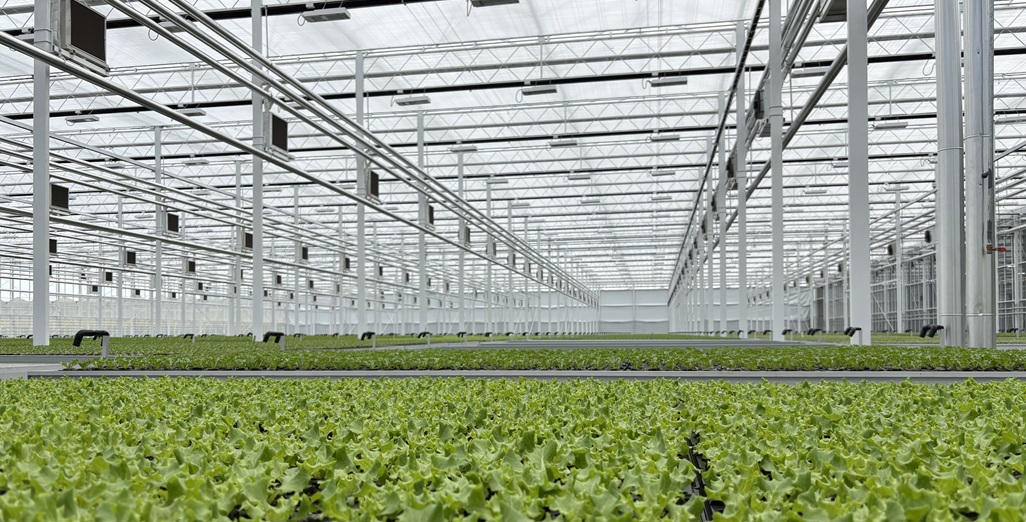
Plant-optimized spectrum to maximize photosynthetic efficiency and productivity:
27% higher yield and 40% energy savings in tomato greenhouse drive Woodeumgee Farm to repeat investment in Philips horticulture LED solution
March 10, 2026
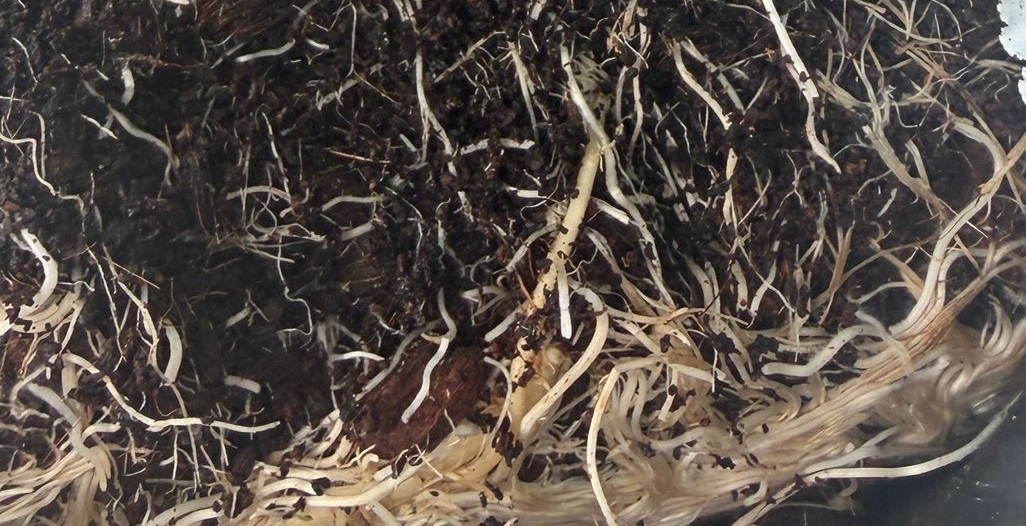
Where Does Fusarium Sit on Your Priority List?
When discussing crop health during technical strategy meetings, Fusarium often does not sit particularly high on the list of priorities.
February 23, 2026
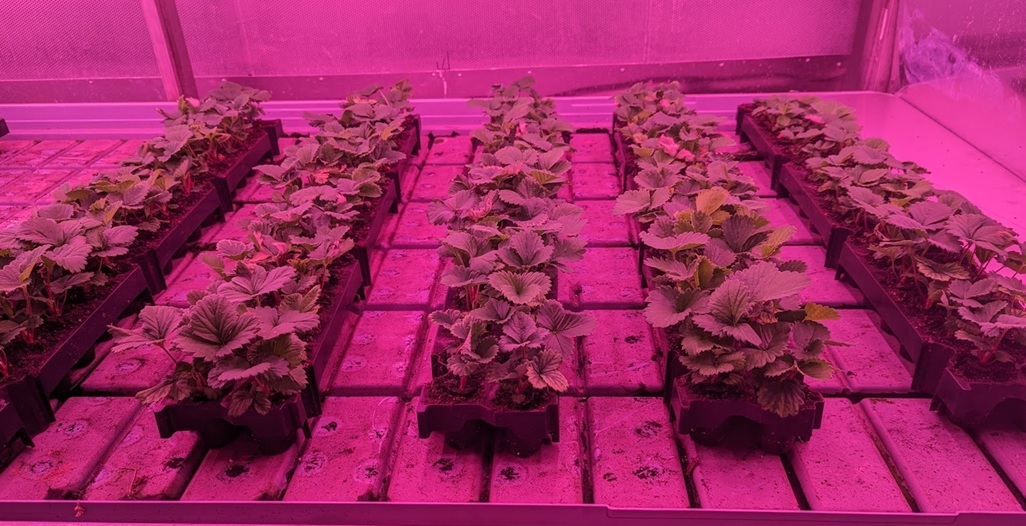
A proven opportunity in strawberry cultivation with indoor-grown generative young plants
Indoor strawberry young-plant production is moving from a promising concept to a proven opportunity. Recent trials with F1 hybrid varieties grown from seed in fully controlled facilities have shown faster development of young plants, a roughly 40% higher fruit yield in the greenhouse, harvesting two weeks earlier, and a clean, chemical-free starting point.
CLASSIFIED