
Sign up here to subscribe to the Grower2grower Ezine. Every two weeks you will receive new articles, specific to the protected cropping industry, informing you of industry news and events straight to your inbox.
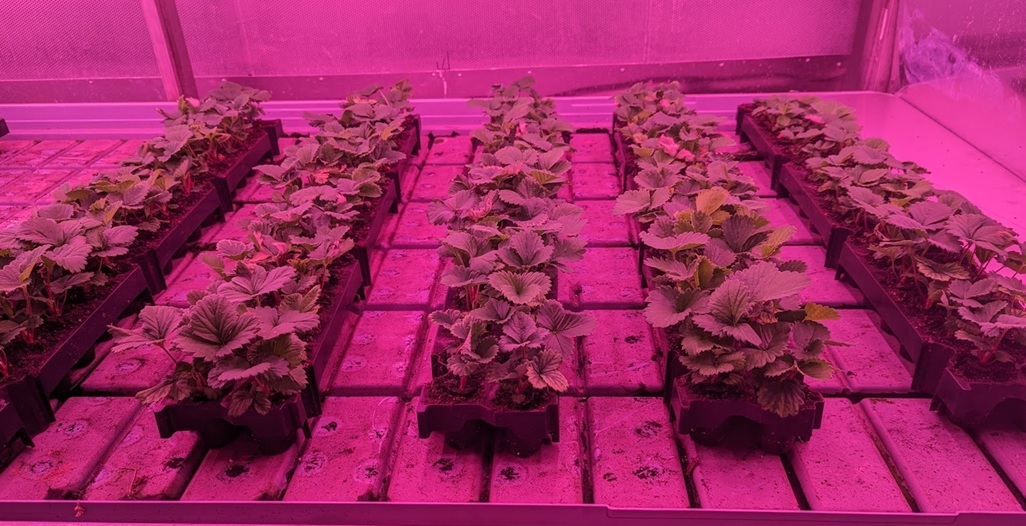
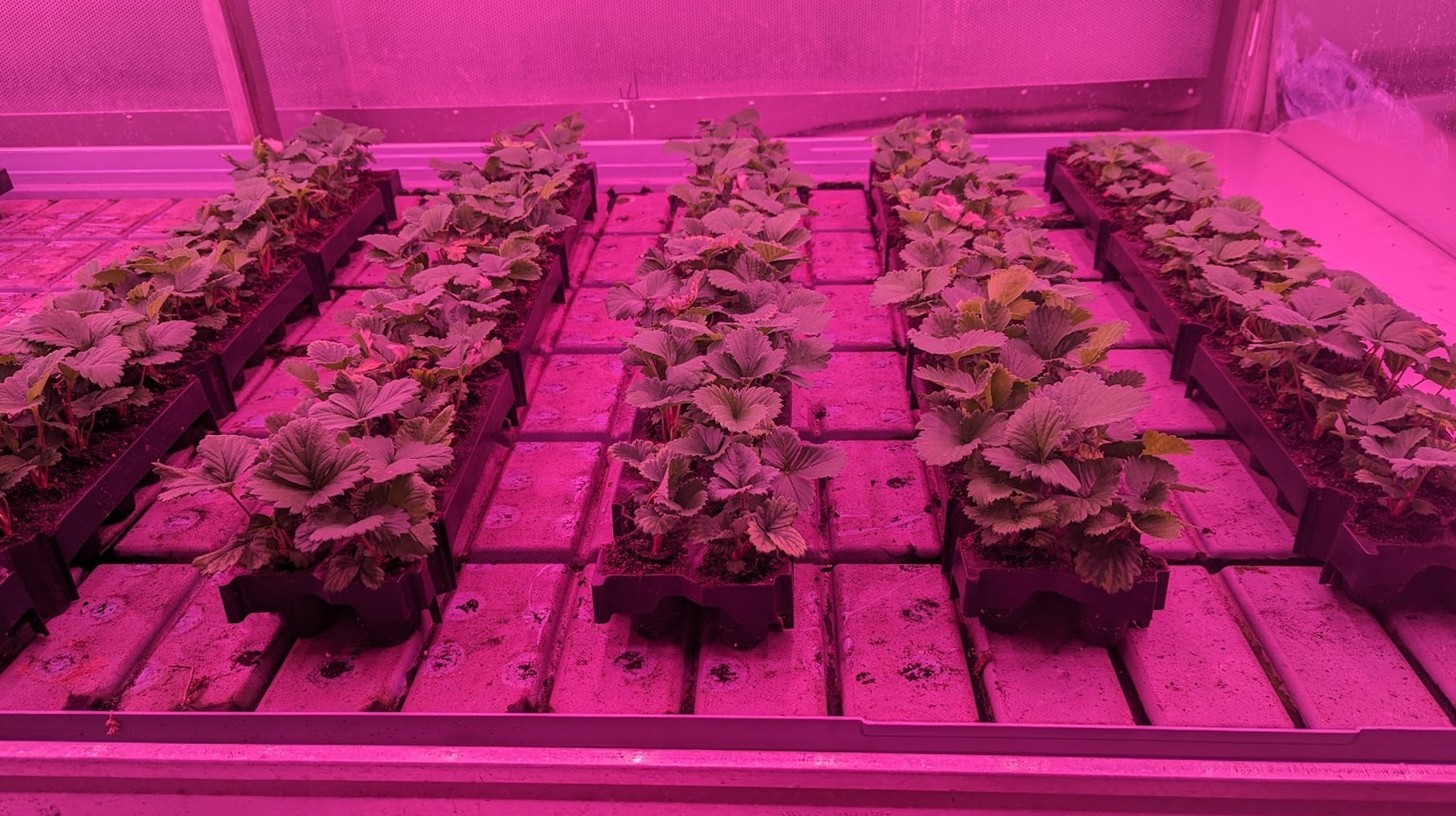
Indoor strawberry young-plant production is moving from a promising concept to a proven opportunity. Recent trials with F1 hybrid varieties grown from seed in fully controlled facilities have shown faster development of young plants, a roughly 40% higher fruit yield in the greenhouse, harvesting two weeks earlier, and a clean, chemical-free starting point.
Why indoor-grown F1 strawberry young plants matter
Over the past two decades, Dutch strawberry production has more than doubled, while acreage has stayed roughly stable, driven by a shift from open field to tunnels and high-tech greenhouses. Better climate control, artificial lighting, and smarter cropping systems have all contributed to this. The next step is the arrival of production-oriented F1 hybrids from seeds, such as Limore 1 from Limgroup, which combines high yield potential with new options for year-round young plants production. To unlock this potential, Signify, Limgroup, and Artechno set up a joint trial to develop indoor propagation protocols and quantify the impact on greenhouse strawberry production.
From outdoor starting material to clean, indoor-grown young plants
It is conventional practice in Northwestern Europe for growers to purchase their strawberry starting material either from outdoor or greenhouse propagation, or a combination of both. In the trial, we tested a new concept in which growers start from seeds and raise their own young plants in a fully controlled indoor environment. Production of such young plants takes around 16 weeks in a lit greenhouse. In a fully controlled environment, our growing protocol delivers comparable flowering plants in about 10 weeks. That is a reduction of more than 30% in propagation time. Additionally, young plants production can be scheduled year-round, decoupled from outdoor seasons.
Light recipes: what really makes the difference?
A key part of the trial was to understand which light spectrum and intensity are needed for an “ideal” strawberry plant. Lighting trials at GrowWise Research Center and Artechno systematically varied the shares of blue (6–36%), green (0–36%), and far-red (6–18%) light at a baseline intensity of 180 μmol m⁻² s⁻¹, with an extra treatment at 270 μmol.
Increasing far-red light clearly promoted flowering and plant height. Young plants cultivated with 12–18% far-red flowered earlier and more uniformly than other treatments. The light intensity of 270 μmol produced very generative, heavy plants, but these did not give higher yields later. In fact, production was lower than with plants grown at 180 μmol, suggesting that pushing light intensity too far throws the plants out of balance. For growers, the practical takeaway is that you do not necessarily need extreme light intensities or complex spectra for young plants. A moderate PPFD around 180 μmol and a sensible dose of far-red are enough to deliver flowering young plants with good production potential.
40% more fruit and an earlier revenue peak
Another crucial question is how indoor-grown young plants perform compared to more traditionally raised strawberries. In a one-to-one comparison, young plants of the same F1 hybrid were benchmarked against each other. The key outcomes were that indoor-grown young plants started production around two weeks earlier, they showed a pronounced early production peak followed by a dip and a second strong flush, and over the full period they delivered about 40% more fruits than the conventionally propagated starting material.
Looking ahead: from protocol to practice
With these trials, we now have a better understanding of the light spectra, intensities, and timings needed to raise strong strawberry young plants from seed under fully controlled conditions. The next trial will focus on whether a longer young plant production period can lead to even heavier, faster-yielding plants, and how to fine-tune the growing protocol for the most optimal production curves in the greenhouse.
Indoor-grown production of F1 strawberry young plants in-house is technically feasible, commercially promising, and no longer a distant future scenario. Whether you work with a specialist young plant supplier or are considering bringing part of propagation in-house, the combination of faster production cycles, higher yields, clean starting material, and a solid ROI makes this “revolution in strawberry cultivation” worth a serious look.

Thijs van den Bergh is a Plant Specialist at Signify Horticulture LED. He is located at the GrowWise Center. His work focuses on setting up and conducting trials aimed at developing growth recipes to efficiently cultivate crops with desired characteristics. He carries out research on light, cropping systems, climate and nutrients for a wide range of crops.
For more information about Philips horticulture LED solutions, visit www.philips.com/horti
For further information, please contact:
Philips horticulture LED solutions by Signify
Daniela Damoiseaux – Global Marcom Manager
For further information, please contact:
Philips horticulture LED solutions by Signify
Daniela Damoiseaux – global marcom manager
Tel: +316 40578311
E-mail:Daniela.damoiseaux@signify.com
About Signify
Signify (Euronext: LIGHT) is the world leader in lighting for professionals and consumers and lighting for the Internet of Things. Our Philips products, Interact connected lighting systems and data-enabled services, deliver business value and transform life in homes, buildings and public spaces. In 2021, we had sales of EUR 6.9 billion, approximately 37,000 employees and a presence in over 70 countries. We unlock the extraordinary potential of light for brighter lives and a better world. We achieved carbon neutrality in 2020, have been in the Dow Jones Sustainability World Index since our IPO for six consecutive years and were named Industry Leader in 2017, 2018 and 2019. News from Signify is located at the Newsroom, Twitter, LinkedIn and Instagram. Information for investors can be found on the Investor Relations page.
New Zealand – Australian Contact:
Aart Slobbe
Account Manager Horticulture LED Solutions
+ 61 448 881 338
Email aart.slobbe@signify.com
Suite 022, 44 Lakeview Drive
Scoresby, VIC 3179, Australia

About Signify
Signify (Euronext: LIGHT) is the world leader in lighting for professionals and consumers and lighting for the Internet of Things. Our Philips products, Interact connected lighting systems and data-enabled services, deliver business value and transform life in homes, buildings and public spaces. With 2020 sales of EUR 6.5 billion, we have approximately 38,000 employees and are present in over 70 countries. We unlock the extraordinary potential of light with smart lighting solutions that improve quality of life, and by working towards a sustainable future. We became a carbon-neutral company in 2020, since our stock market listing, we have been in the Dow Jones Sustainability World Index for four years in a row and were named Industry Leader in 2017, 2018 and 2019. News from Signify is located at the Newsroom, Twitter, LinkedIn and Instagram. Information for investors can be found on the Investor Relations page.
For all media releases please send to marie@grower2grower.co.nz or upload directly: https://www.grower2grower.co.nz/article-form/
CLASSIFIED










Photo
Gallery




Subscribe to our E-Zine
More
From This Category
July 13, 2026
Philips LED lighting enables precise winter growing at Truly Green Farms (Canada)
For Truly Green Farms, winter tomato production depends on having the right lighting system in place.
June 29, 2026
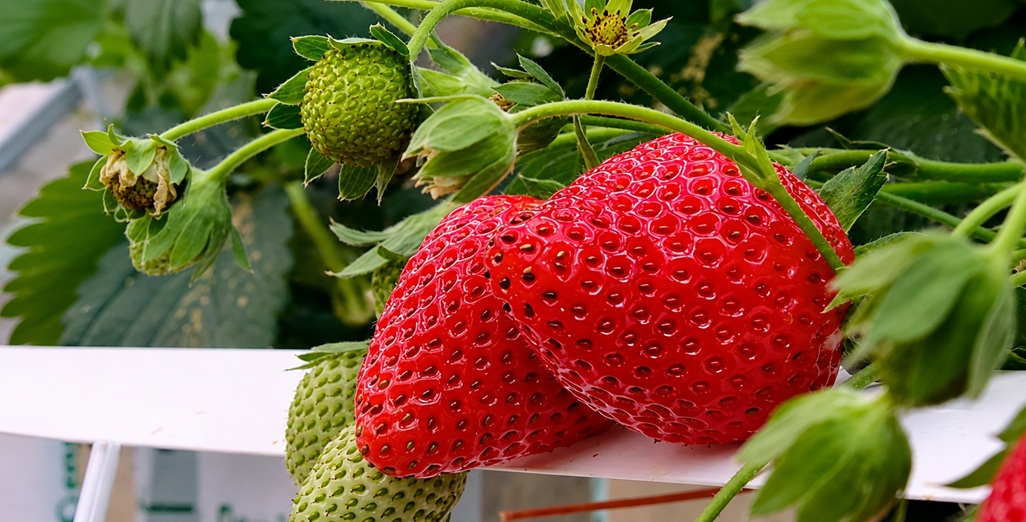
How stone wool and lighting can change the game for strawberry growers
An ever- higher number of strawberry growers are discovering the benefits of Controlled Environment Agriculture
June 29, 2026
Are your LEDs ready for the future?
How can you stay in control as lighting becomes more complex?
June 15, 2026
Signify expands Philips GreenPower LED toplighting force portfolio with tailored solutions for today’s diverse grower strategies
New Performance and Elite versions empower growers to optimize either upfront investment or long-term operational efficiency—without compromising on Philips quality
June 1, 2026
Signify: Developing next-generation cultivation systems that shorten growing cycles while maintaining consistent crop quality
Signify boosts crop productivity and cost competitiveness at Yonam University smart farming hub with intelligent Philips LED lighting
May 5, 2026
Turn sunshine into synergy and unlock higher yields year-round
How LED intercanopy lighting complements high radiation and transforms greenhouse production
CLASSIFIED