

Sign up here to subscribe to the Grower2grower Ezine. Every two weeks you will receive new articles, specific to the protected cropping industry, informing you of industry news and events straight to your inbox.
12
Feb 2024
Feb 2024
Starting on the back foot
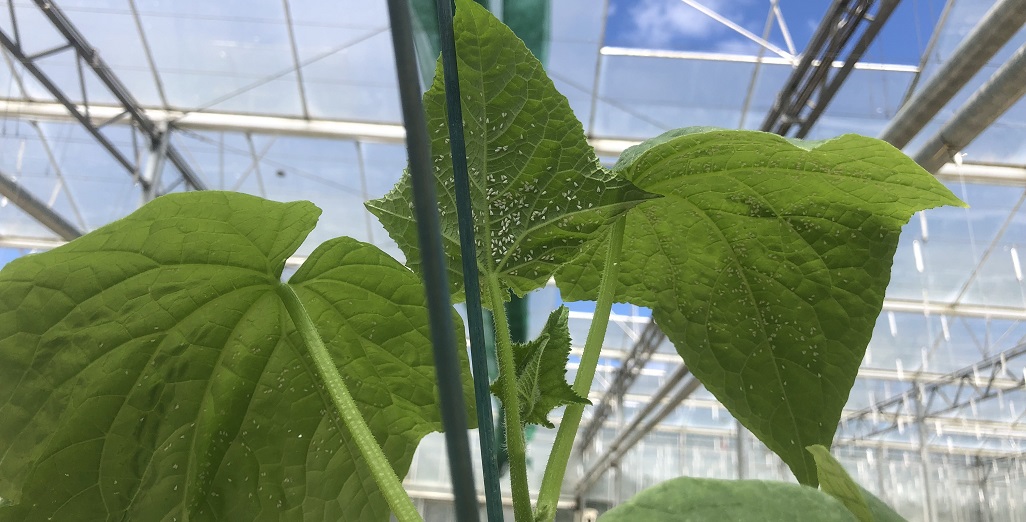
Outdoor populations of white fly exploding
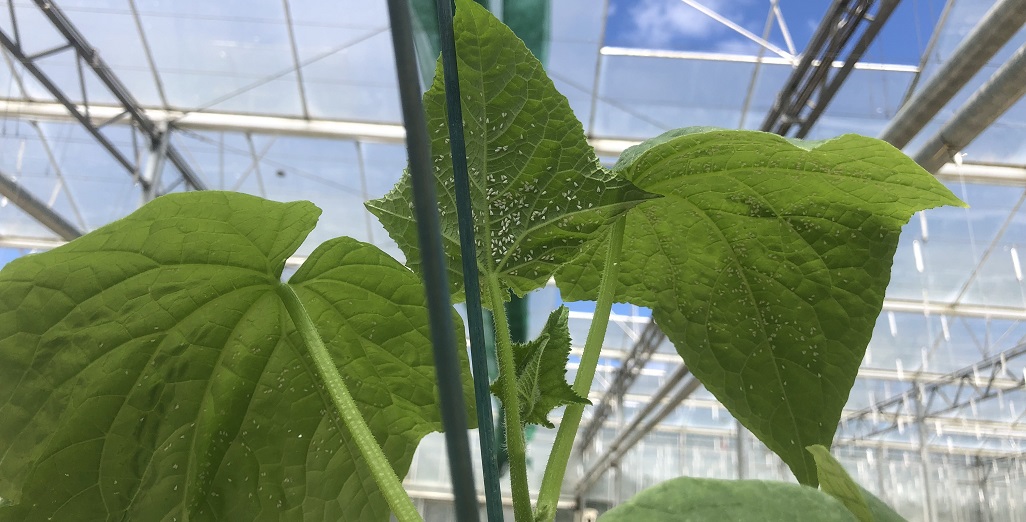
Two recent reports indicated that whitefly had literally ‘exploded’ into crops at locations in Auckland and Hamilton. Late last week I visited one South Auckland cucumber grower who had young plants delivered from a nursery the previous day with no whitefly present, and in just over twenty-four hours post-delivery (cover image) the amount of whitefly on the new plants was devastating. Located outside the greenhouse is commercial market gardening, which is common in the South Auckland region. It is summer and along with the elevated temperatures and beautiful sunny spells, add to that several rainy days, you have the perfect storm for an outdoor whitefly population explosion.
As per the photo you will see that the amount of whitefly on the leaves is already in the hundreds, well over any acceptable threshold.
What advice do you give when you see this depressing sight –one of my least favoured approaches, that of necessary immediate intervention – spraying! The ongoing issue is that spraying will need to continue more than once a week, to stay on top of the daily arrivals from outside.
ALT (A Lighter Touch)
The work of ALT research is a large contributing factor for the delivery of positive results numerous growers have achieved this season using Integrated Pest Management systems (IPM). For several years now beneficial insect providers Zonda and Bio-force alongside many fantastic growers/businesses have been identifying new beneficial pests and how to integrate and compliment Encarsia (especially for tomato growers).
The challenge is to understand if anything else, with a lighter touch in mind, could be applied when these sudden explosions of insects occur that are out of the growers control. Growers could use copious amounts of sticky traps, bring in more beneficials (if available) and still not keep up with these pests. Controlling outdoor populations is an unrealistic option, so the work is far from finished.
In the meantime, spraying is the appropriate action. Spraying with soaps or oil-based products is an option but continual spraying of such products during extremely hot and bright weather is most likely going to physically damage a cucumber crop. Chemical options are generally the ‘go to’ currently.
General Advice:
- Talk with your suppliers about the appropriate chemicals, soaps, or oils if you believe you need to spray these.
- Avoid spraying during extreme temperatures (always ask your supplier about the time of the day to apply and how fast the product needs to dry – avoid as much leaf and fruit damage as possible)
- Target the whitefly in the head of the plant – so check the angle of the nozzles and height of the boom for best coverage.
- Make sure the PH of the spray mix is the advised level according to the label of any product!
- Always take care when combining products. (Ask your supplier first!)
Article compiled by Stefan Vogrincic.
All Article’s checked and edited by Marie Vogrincic. For all media releases please send to marie@grower2grower.co.nz or upload directly: https://www.grower2grower.co.nz/article-form/
I appreciate your comments. Please feel free to comment on the grower2grower Facebook page or email: stefan@grower2grower.co.nz
CLASSIFIED



















Photo
Gallery












Subscribe to our E-Zine
More
From This Category

April 20, 2026
The Environmental Protection Authority (EPA) has approved a new fungicide seed treatment to control disease on potatoes.
The New Zealand potato industry is valued at approximately $1 billion annually, according to Potatoes New Zealand.

April 20, 2026
Signify wins HortiContact Innovation Award for Philips intelligent horticulture lighting solutions
“We are incredibly proud of this recognition”

April 7, 2026
Proposed import requirements for fresh blueberries (Vaccinium spp.) for human consumption
Make your submission
March 23, 2026
The Environmental Protection Authority (EPA) maintained the upward trend for hazardous substances decisions in the second quarter of the 2025-26 year.
Dr Lauren Fleury, Manager Hazardous Substances Applications, says the EPA continues to use rapid assessment pathways where possible. Of the 16 approved applications in the second quarter, 13 were decided by rapid assessment.

March 23, 2026
Source Advances Harvest Forecasting for Tomatoes with Next Generation AI Model
Fundamental changes to how the model learns and handles grower input mean significantly less manual work and meaningfully better accuracy.

March 10, 2026
Australia’s horticulture sector has delivered a year of record‑breaking performance
Highest production value to date of $18.4 billion, up 6% on the previous year.
CLASSIFIED