

Sign up here to subscribe to the Grower2grower Ezine. Every two weeks you will receive new articles, specific to the protected cropping industry, informing you of industry news and events straight to your inbox.
2
Jul 2024
Jul 2024
Workshop for Auckland’s Korean tomato growers held last week
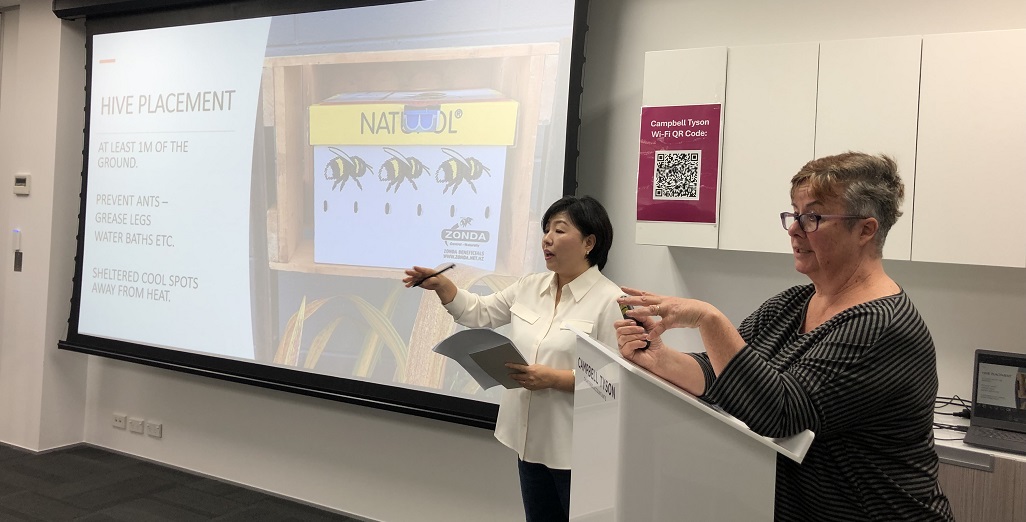
I was delighted to deliver a presentation to more than twenty Auckland based Korean Tomato Growers at the Campbell and Tyson meeting rooms in Pukekohe.
The event was organised by tomato grower and Tomato NZ board member, Jiny Kim owner or MJ Fresh Ltd based in Waiuku.
Along with Kim Martin from Zonda Bees, Lex Dillon (A Lighter Touch) and Chris Thompson from Bioforce, we all delivered our presentations with expert translation from Jiny.
Having Jiny Kim organize and translate the presentations was undoubtedly invaluable, especially considering the language barrier many growers face. It’s wonderful to see collaboration and support within the community, facilitated by events like this. Congratulations to Jiny Kim for organizing such a successful gathering, and to all the attendees for their participation and engagement!
A brief rundown of the presentations:
Grower2Grower:
My presentation included the following topics:
Nutrition
- PH and EC at different crop stages required
- Fruit Quality
- Plant deficiencies
- The role of calcium
- Root health
- Generative and Vegetative growth
- Environmental Control – Humidity and temperature- effects on nutrition
Chemicals
- Potential Chemicals programmes
- Withholding periods
- Spray efficacy
IPM (Integrated Pest Management)
- IPM –reasons why growers find it difficult to implement successful programmes (Encarsia)
- Yellow sticky traps
- Whitefly thresholds
Hygiene and Virus
- Disinfection of water
- Greenhouse cleanliness
- Pepino Mosaic Virus (PepMV)
- Tomato Brown Rugose virus ToBRFV.
Example – the role calcium has in plant growth:
The understanding of how calcium affects tomato growth and how temperature influences calcium absorption. Avoiding pre-night cooling makes sense if it helps maintain a steady calcium flow, which is crucial for healthy plant development, particularly in reducing the risk of calcium deficiency-related issues like blossom end rot.
Your approach of opting for a gradual cool down in the evening rather than a sudden temperature drop seems well-considered. This way, the plants can adjust more gradually, potentially enhancing overall growth and yield.
Additional Information:
‘Conditions of high humidity, cold and a low transpiration rate may result in calcium deficiency. Salinity build-up might also cause calcium deficiency because it decreases the water uptake by the plant.’
Roles of Calcium in Plants: Calcium is an essential plant nutrient. It has many roles:
- Participates in metabolic processes of other nutrients uptake.
- Promotes proper plant cell elongation.
- Strengthen cell wall structure – calcium is an essential part of plant cell
- It forms calcium pectate compounds which give stability to cell walls and bind cells together.
- Participates in enzymatic and hormonal processes.
- Helps in protecting the plant against heat stress.
- Calcium improves stomata function and participates in induction of heat shock proteins.
- Helps in protecting the plant against diseases through stronger cell walls.
- Effects fruit quality.
- Has a role in the regulation of the stomata.

Zonda Beneficials:
Kim Martin from Zonda Beneficials superbly explained the life cycle and care required for Bumble Bees. The main points from her presentations were:
- The life cycle of the bees
- Hive Placements
- Setting and Frequency of hive replacement
- Hives required per ha.
- Spraying compatibility/ how long to remove hives and return.
- Available resources
A few useful facts: One bumble bee does the work of one hundred honeybees. The second useful fact is females do all the work, scouting, pollinating, hive building and cleaning – the males will leave the hive to do basically nothing!
A lighter Touch & Bioforce:
Chris Thompson from Bio-force and Lex Dillon representing A lighter Touch programme, jointly gave a highly informative presentation on the life cycle of whitefly including a discussion on biological control agents (BCA’s) with the aim of finding the right combination to achieve reducing target pests.
Chris gave great examples of the different chemicals/insecticides available and at what life stage they kill whitefly, including the long-term negative effect these insecticides can have on the life cycle of Encarsia as the example.
https://a-lighter-touch.co.nz/our-projects/tomato-potato-psyllid-tpp/
Article and images provided by Stefan Vogrincic. Please e-mail stefan@grower2grower.co.nz
Send media releases to marie@grower2grower.co.nz

CLASSIFIED














Photo
Gallery





Subscribe to our E-Zine
More
From This Category
April 20, 2026
IFPA Produce Executive Program returning to Auckland
Week-long fully residential program environment facilitates deep level collaboration, learning and engagement
April 20, 2026
Delphy Academy Training – Fertigation in Horticulture
In this online training (English spoken) you will learn about the chemical aspects of nutrients and fertigation, how to read an analysis, and how to make adjustments to the fertilizer recipe. Calculation of your own A and B tank filling from a recipe. The uptake of water and nutrients by the plant and the relationship with pH and EC.
April 7, 2026
The 2026 Hydroponic Farmers Federation Conference (Melbourne) Update
Fast approaching event: Final reminder to register for this important event.
March 23, 2026
Bringing the Sector Together: Covered Cropping NZ Launches
Greater collaboration, stronger representation, and better use of levy funding sit behind the new joint approach from Tomatoes New Zealand and Vegetables New Zealand Incorporated. There has been a call, for several years, that TNZ and VNZI should work together more closely as there are so many similarities amongst the greenhouse sector, including the growers themselves.
March 23, 2026
Energy Under Pressure: Growers Invited to Pukekohe Open Day
Join Tomatoes New Zealand and Vegetables New Zealand on 14 May for site visits and supplier discussions showcasing real-world energy solutions, cost savings, and practical pathways for the season ahead.
March 10, 2026
The 2026 Hydroponic Farmers Federation Conference (Melbourne)
2026 program has been carefully designed to address the key issues currently facing hydroponic growers
CLASSIFIED