
Sign up here to subscribe to the Grower2grower Ezine. Every two weeks you will receive new articles, specific to the protected cropping industry, informing you of industry news and events straight to your inbox.
12
Oct 2021
Oct 2021
AntiReflect Coatings for NZ?
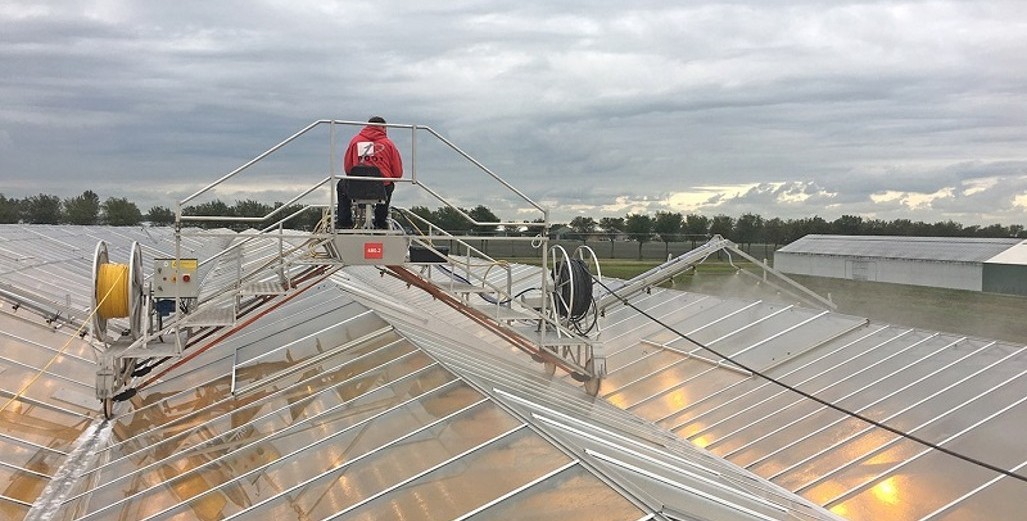
Higher Production Under AntiReflect
Growers in New Zealand, producing flowers or vegetable crops in glasshouses, have the advantage of more direct sunlight penetrating their crops compared to plastic structures. For newer builds there is the option of purchasing glass with anti-reflect coatings but for the bulk of glasshouses in New Zealand this is not the case. Redusystems has developed an anti-reflect coating. Growers in Europe, that are using this coating, are already seeing higher production as more light is entering their greenhouses.
What does Anti-Reflective mean:
An antireflective or anti-reflection coating is a type of optical coating applied to the surface of lenses, and other optical elements, to reduce reflection. In typical imaging systems, this improves the efficiency since less light is lost due to reflection. (Source Wikipedia)
(In other words, if you don’t have antireflection glass on your greenhouse then some light reflects off the glass, therefore reducing plant growth/production potential under un-treated glass.)
Below is an article and link offering more information on this recently developed Redusystem product. I am not aware of many growers using this product in New Zealand but it is certainly a development that may be worth investigating. (Stefan Vogrincic)
Practical Tests Confirm Higher Production Under AntiReflect.
The first growers to use the new AntiReflect coating are seeing higher production as more light is entering their greenhouses. AntiReflect is being launched commercially this year.
After many years of development and testing, Mardenkro is this fall launching its revolutionary coating which reduces reflection off the greenhouse roof. This new product brings more than 3% more light into the greenhouse all year round. The coating can be applied to any existing glass greenhouse, thus putting antireflection within reach of every grower.
MORE LIGHT CONVERTED INTO MORE PRODUCTION
Prior to the launch, several nurseries tested the coating at their nurseries last winter and spring. These practical tests confirm the increase in production, model calculations by Wageningen University & Research (WUR) reveal.
Using the Intkam crop model, the WUR researchers measured how well vegetable and ornamental crops were able to convert the additional incoming light into production. The result in tomato (standard cultivation) and sweet pepper was an increase of around 3%, with more than 5% in cucumber (2 crops per year). Production in rose and gerbera was up by more than 2.5% and by more than 3% in chrysanthemum. The calculations in ornamental crops took account of the assimilation lighting used.
EFFECTIVE IN ALL SEASONS
A proportion of sunlight is lost due to reflection off a greenhouse roof with standard glass and therefore cannot be converted into production. This reflection can be prevented with AR glass, but that is only an option in a new build. For existing glass greenhouses, AntiReflect works just as well – in fact, the coating scores even better in some respects. It is dirt-repellent, so less dirt adheres to the coated greenhouse roof than to standard glass. This feature can boost light gain in the greenhouse.
In the Light Lab at WUR, measurements and calculations were performed using the Raypro model to determine transmission at all angles of incidence. This is important because every additional percent of light counts in the darker months, when the sun shines in at a low angle for most of the day. According to this research, transmission is always between 3 and 4 percent higher than on uncoated glass over a large trajectory – from 0° to around 70°. The researchers concluded that the light gain is constant in all months. Besides PAR light, transmission of infrared light also increases, albeit to a lesser extent.
COATINGS CAN BE COMBINED
AntiReflect can be left on the greenhouse roof all year round and lasts for at least a year. Other coatings such as ReduFuse and ReduHeat can be applied on top with no performance loss. When these coatings are removed at the end of the season, the AR function of the coating underneath remains intact.
CAREFUL APPLICATION IS KEY
The amount of transmission depends mainly on the thickness of the coating. So Mardenkro has liaised with contractors to produce work instructions for applying a very even layer on a clean greenhouse roof. This can only be done mechanically. Some of these companies were involved in the trial phase and are fully aware of the level of care required, while others will have to carry out tests themselves to achieve the best result.
AntiReflect is only available as a ready-to-use formulation, so it is impossible to get the dose wrong.
To avoid damaging the coating, no fluoride-based cleaning products should be used on it. When removing a coating applied on top (such as ReduFuse or ReduHeat) with ReduClean, it is important to allow it to be washed off by rain and not to immediately remove it with a roof washer.
Exercising care at all times will ensure an effective coating that performs well and generates gains for the grower all year round.
https://www.redusystems.com/en/articles/practical-tests-confirm-higher-production-under-antireflect
Article content supplied by REDUSYSTEMS:
Contact your local Horticentre branch for RedySystems products
Check out the below related Mardenkro video
CLASSIFIED











Subscribe to our E-Zine
More
From This Category
March 10, 2026
Australia’s horticulture sector has delivered a year of record‑breaking performance
Highest production value to date of $18.4 billion, up 6% on the previous year.
March 10, 2026
Energy saving through screens
A combination of screen use, screen quality, greenhouse climate requirements, and greenhouse equipment.
March 10, 2026
Heating Uncertainty Leaves Greenhouse Growers Searching for Answers
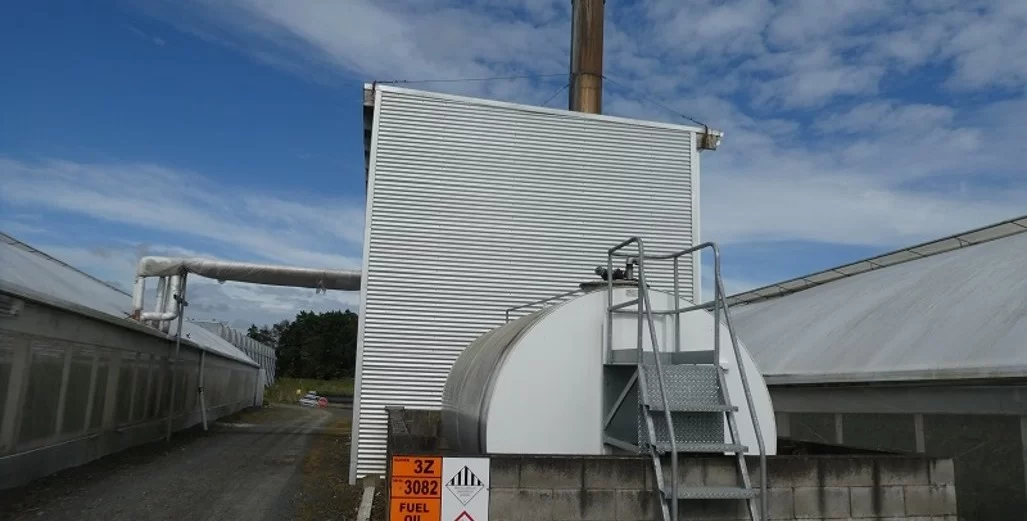
Waste oil supply changes force growers to reconsider long-term heating options ahead of winter. Two weeks ago I was alerted that one of the major recycled waste oil suppliers, based in the Auckland region, will soon stop supplying greenhouse growers. For one of my customers this came as a significant shock, particularly given that notice was given that deliveries will cease in the coming months –

February 10, 2026
MG Group partners with The Gut Foundation
Growing a healthier New Zealand together
January 27, 2026
Protected Cropping, Weather Extremes And Growth Potential
Extreme weather again highlights the role of protected cropping. During last week’s deluge across the North Island, significant damage is expected across many outdoor crops. Onions lying on the ground and attempting to dry will be particularly vulnerable, with prolonged saturation likely to result in quality losses and storage issues.
CLASSIFIED