

Sign up here to subscribe to the Grower2grower Ezine. Every two weeks you will receive new articles, specific to the protected cropping industry, informing you of industry news and events straight to your inbox.
25
Feb 2025
Feb 2025
Bayer says Sivanto Prime has a new way of working that targets sucking pests such as aphids, nysius fly and springtails

The Environmental Protection Authority (EPA) has approved a new insecticide to control pests on key crops such as beets for livestock, and brassicas.
Bayer New Zealand applied to import or manufacture Sivanto Prime, an insecticide containing 200 g/L of flupyradifurone, a chemical new to New Zealand.
Bayer says Sivanto Prime has a new way of working that targets sucking pests such as aphids, nysius fly and springtails, providing growers with an alternative to older, broad-spectrum insecticides.
“This decision will help farmers protect crops that are essential to New Zealand’s primary sector,” says Dr Lauren Fleury, EPA Hazardous Substances Applications Manager.
Insect pests can cause significant damage to feed crops, making them less palatable to stock and reducing yields.
Bayer says Sivanto Prime may be considered compatible with newer, lighter-touch farming practices because it works in a more targeted way.
The decision to approve Sivanto Prime was made following a rigorous assessment and consultation process, says Dr Fleury.
“As this product contains an active ingredient that is new to New Zealand, we assessed the scientific data and evidence, as well as economic and local information, to help enable new chemistry while continuing to protect people’s health and our unique environment.”
Flupyradifurone is approved for use in other countries, including Australia, Canada, Europe, Japan, and the United States of America.
The substance can only be used by professionals in commercial settings, and users must comply with specific controls.
As an agricultural compound, Sivanto Prime must also receive approval from the Ministry for Primary Industries (MPI) before it can be used in New Zealand.
For more information contact:
Alisa Yong | Senior Communications Advisor, Environmental Protection Authority
Email: media@epa.govt.nz

CLASSIFIED



















Photo
Gallery








Subscribe to our E-Zine
More
From This Category

March 10, 2026
Australia’s horticulture sector has delivered a year of record‑breaking performance
Highest production value to date of $18.4 billion, up 6% on the previous year.

March 10, 2026
Energy saving through screens
A combination of screen use, screen quality, greenhouse climate requirements, and greenhouse equipment.
March 10, 2026
Heating Uncertainty Leaves Greenhouse Growers Searching for Answers
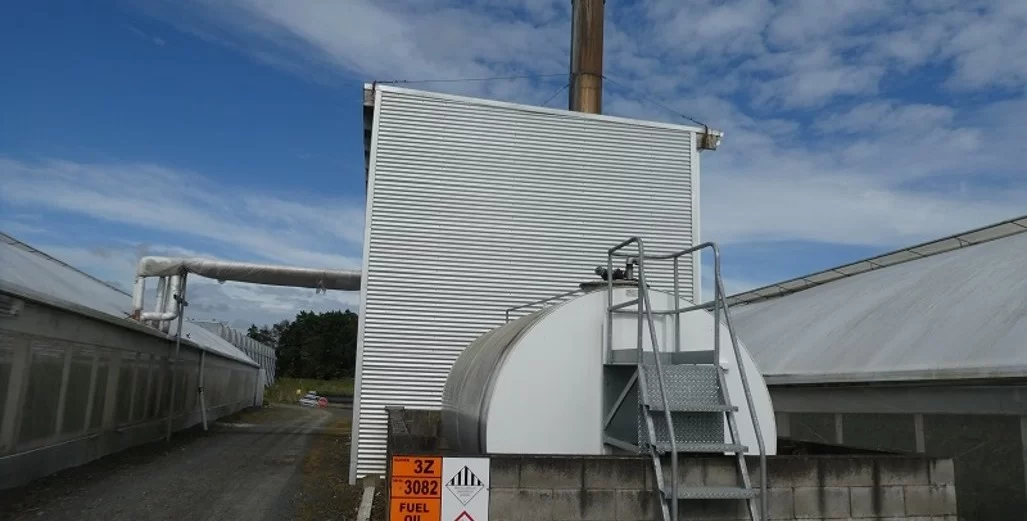
Waste oil supply changes force growers to reconsider long-term heating options ahead of winter. Two weeks ago I was alerted that one of the major recycled waste oil suppliers, based in the Auckland region, will soon stop supplying greenhouse growers. For one of my customers this came as a significant shock, particularly given that notice was given that deliveries will cease in the coming months –

February 10, 2026
MG Group partners with The Gut Foundation
Growing a healthier New Zealand together

January 27, 2026
Protected Cropping, Weather Extremes And Growth Potential
Extreme weather again highlights the role of protected cropping. During last week’s deluge across the North Island, significant damage is expected across many outdoor crops. Onions lying on the ground and attempting to dry will be particularly vulnerable, with prolonged saturation likely to result in quality losses and storage issues.
CLASSIFIED