

Sign up here to subscribe to the Grower2grower Ezine. Every two weeks you will receive new articles, specific to the protected cropping industry, informing you of industry news and events straight to your inbox.
8
Oct 2024
Oct 2024
High-tech spy gear to uncover the secrets of Bumble bees in Tasmania

Bumble bees in Tasmania are being geared up with micro radio transmitters and cameras to help scientists uncover their environmental impact and crucial role in crop pollination.
Delivered through Hort Innovation’s Frontiers investment program and led by Western Sydney University, the $3.3M initiative will produce a comprehensive large-scale study of the Buff-tailed Bumble bee.
The program will use various cutting-edge technological solutions to efficiently generate a large volume of unique and rigorously collected data.
Hort Innovation chief executive officer Brett Fifield said this investment forms part of a multi-pronged approach to ensure the horticulture sector is prepared for the future.
“This investment is a prime example of using breakthrough research to strengthen industry’s readiness for existing and emerging opportunities and threats,” Mr Fifield said.
“With the arrival of Varroa mite to the Australian mainland, there is a sense of urgency for industry to explore other potential options for safeguarding crop pollination services across the country. This research will expand our knowledge of Bumble bees in Tasmania, giving growers another tool in their toolkit.”
Western Sydney University postdoctoral researcher Dr James Makinson said incorporating state-of-the-art technology will result in significantly more comprehensive insights than previously possible.
“Radio transmitters will allow us to discover the daily foraging habits of Bumble bee queens in different agricultural and natural landscapes and allow us to follow bees back to their nests. Transmitters can be easily recovered, allowing us to track dozens of individuals across multiple field sites in a single season,” Dr Makinson said.
“The automated real-time analysis of video footage from our audiovisual monitors will allow us to collect long-term continuous data of the foraging activity of wild Bumble bee and managed Honey bee colonies, saving 100s of hours of fieldwork and data analysis.”
“Monitoring cameras can be placed in the field and left alone, allowing a single researcher to monitor multiple locations of interest, passively collecting data for multiple experiments.”
Fruit Growers Tasmania chief executive officer Peter Cornish said the insights will help the Tasmanian horticulture industry plan effectively for the future.
“This research will answer important questions about Bumble bees as pollinators. What are Bumble bees doing in Tasmanian ecosystems? How are they interacting with different commercially-important crops? Can their populations be naturally manipulated to achieve conservation or pollination service goals?” Mr Cornish said.
“The findings will inform future decision-making for our industry on how to best balance the risks and opportunities posed by Bumble bee pollination services in Tasmania.”
Tasmanian tomato grower Anthony Brandsema said local growers welcome the start of this research.
“The insights generated by this research will be invaluable to growers across Tasmania looking to boost pollination on their farms,” Mr Brandsema said.
This program is funded through Hort Innovation’s Frontiers investment program, with co-investment from Western Sydney University, the Rubus R&D levy and contributions from the Australian Government. Collaborating partners include the University of Tasmania and James Cook University.
Publication date: 15 September 2024

CLASSIFIED
















Photo
Gallery




Subscribe to our E-Zine
More
From This Category
January 27, 2026
Three research insights in preventing tip burn in a hybrid LED tomato crop
Research article: When transitioning from HPS lights to LEDs, the screen and heating strategies can rarely be directly copied from a previous HPS setup.
January 12, 2026
Successfully upgrading their HPS lighting across 45 hectares at six cultivation sites
Vreugdenhil-Klugt optimizes year-round plant production with Philips GreenPower LED and GrowWise control system
December 29, 2025
Best of 2025 – Strawberry New Zealand Conference Review
How to reduce heat from your structures during the warmer months. High temperatures can dramatically affect a strawberry plant’s ability to set fruit and maintain fruit size. The longer you can reduce the negative impact of heat stress, the longer you can sustain consistent production, quality, and shelf life.
December 17, 2025
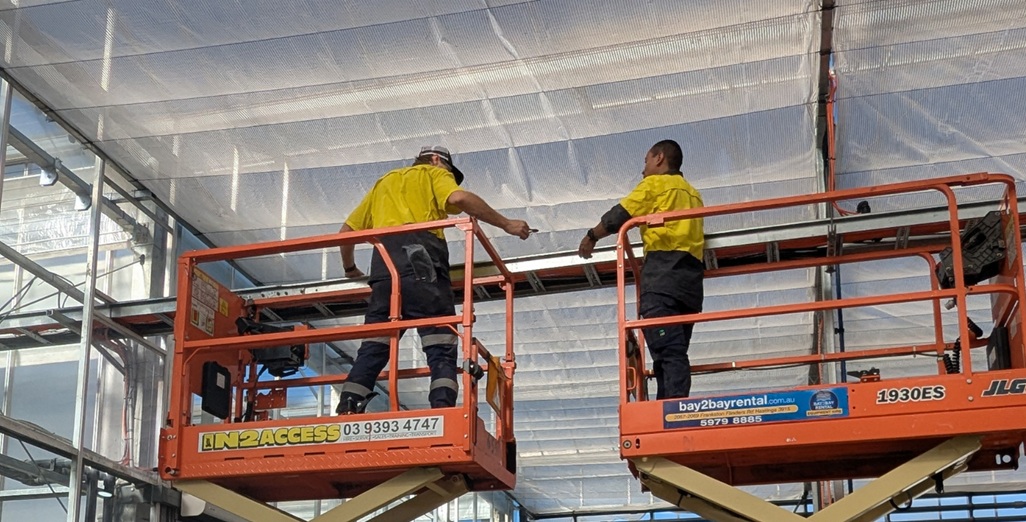
Ball Australia Boosts Climate Control with New Blackout Screen Upgrade
'Powerplants partnered with Ball Australia to deliver a full blackout screen replacement, supported by detailed mechanical, electrical, and irrigation work'
December 2, 2025
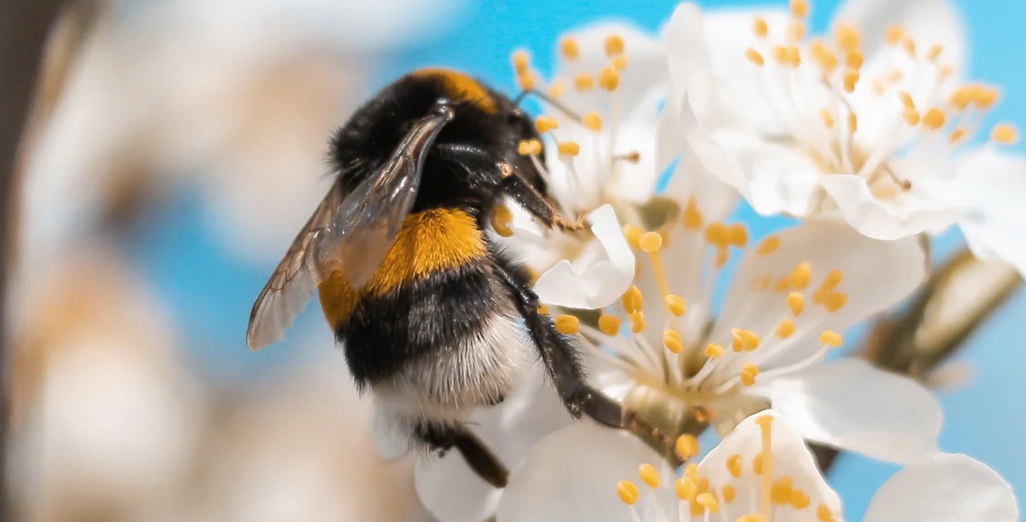
Treat your bumble bees as VIP’s (VIB’s)
Hives should be placed 1.2–1.5 metres above the ground, away from direct sunlight!
December 2, 2025
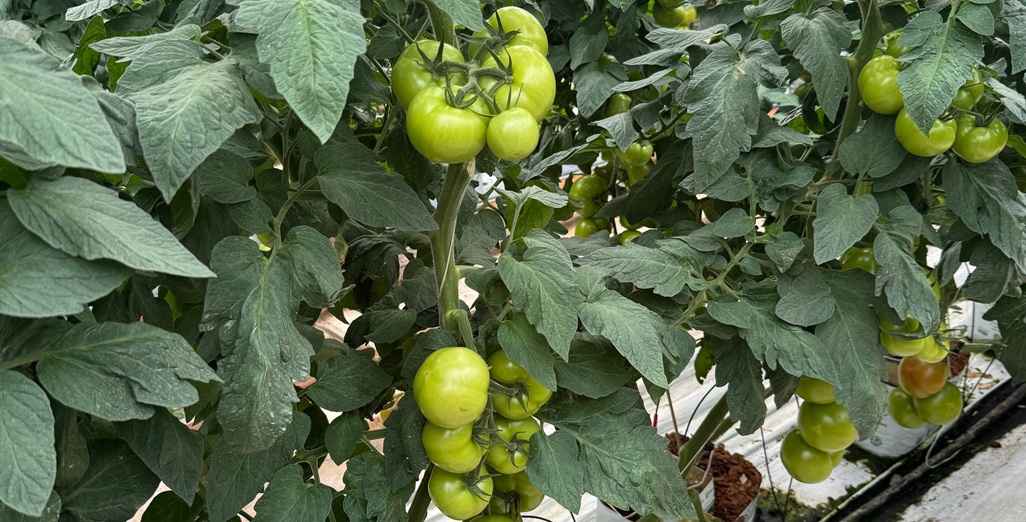
Why Maintaining Cool Slab Temperatures Is Critical for Greenhouse Crops
Unseasonably hot weather for this time of year—have highlighted just how vulnerable greenhouse crops can be when slab temperatures climb beyond safe limits.
CLASSIFIED