
Sign up here to subscribe to the Grower2grower Ezine. Every two weeks you will receive new articles, specific to the protected cropping industry, informing you of industry news and events straight to your inbox.
29
Jun 2026
Jun 2026
How stone wool and lighting can change the game for strawberry growers
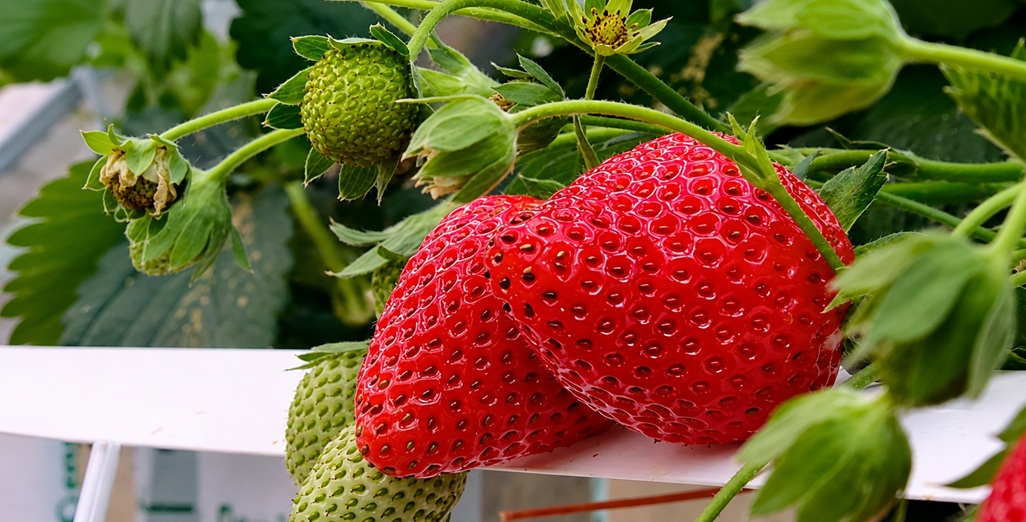
What if you could grow high-quality, everbearing strawberries year-round—without dormancy slowing you down
Grodan and Fluence, two leading horticultural solution providers, have completed an innovative demonstration trial aimed at exploring the opportunities for year-round cultivation of everbearing strawberries in a controlled environment. The results show that the use of stone wool growing media in combination with cutting-edge LED technology makes it possible to stay out of dormancy and maintain high-quality plants with a high yield throughout the winter. These findings have the potential to redefine the best practices for high-tech cultivation of everbearing strawberries, enabling growers to consistently supply retailers and consumers with fresh, high-quality strawberries all year round.
As popular premium fruits among consumers, strawberries are an interesting proposition for growers, especially if they can be cultivated in winter when prices for off-season fresh produce are at their peak. An ever- higher number of strawberry growers are discovering the benefits of Controlled Environment Agriculture (CEA), which helps them to meet market demands by making them less dependent on the outdoor weather conditions. In Europe, high-tech strawberry growers traditionally use junebearing varieties for lit cultivation in winter cycles because of the dormancy issues that are associated with everbearing varieties. However, junebearers mean that growers see a two month growing period followed by two month harvesting period. “These strawberry growers are forced to make a choice because the planting time determines the harvesting period, essentially you can only produce two months in the same greenhouse during winter,” says Thomas Peters, Business Development Manager at Grodan.
Summary of the final results for strawberries planted on August 22, 2023 till May 16, 2024. • The strawberry plants maintained their active growth and stayed out of dormancy during the dark Dutch winter season • 16.5 kg/m (based on 6 plants per linear metre) and 15 kg/m2 (5.2 plants/m2) • Over 90% of the total yield were class 1 fruits • Production peaks were flattened, giving a minimum weekly production of 200 g/m • The heat input was kept to a bare minimum: less than 2 m3 of natural gas was needed to heat the greenhouse
Continue reading here
grodan-whitepaper-how-stone-wool-and-lighting-can-change-the-game-for-strawberry-growers.pdf
CLASSIFIED















Photo
Gallery


Subscribe to our E-Zine
More
From This Category
September 7, 2026
The promising future of strawberry cultivation
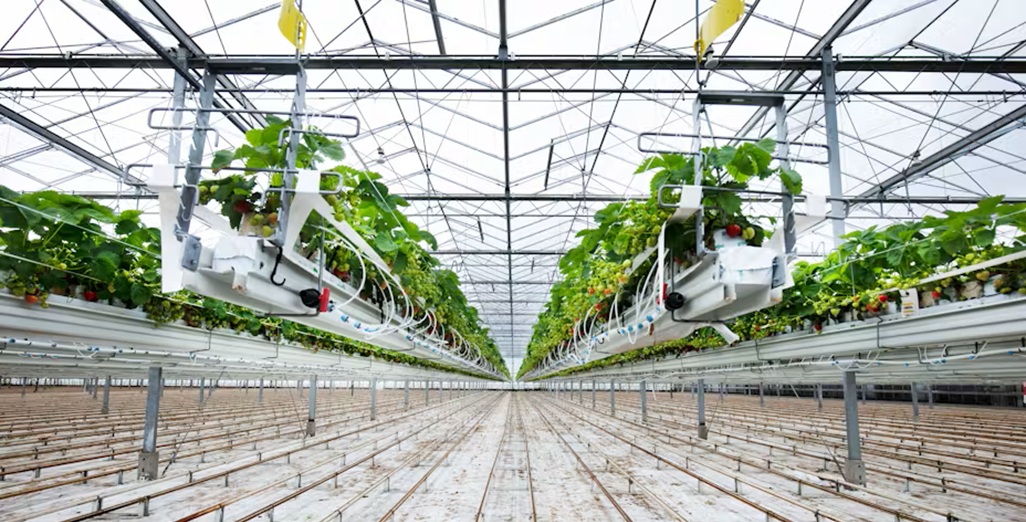
After the classic greenhouse vegetables (tomatoes, cucumbers, peppers), strawberries are also on the rise in high-tech greenhouses.
June 29, 2026
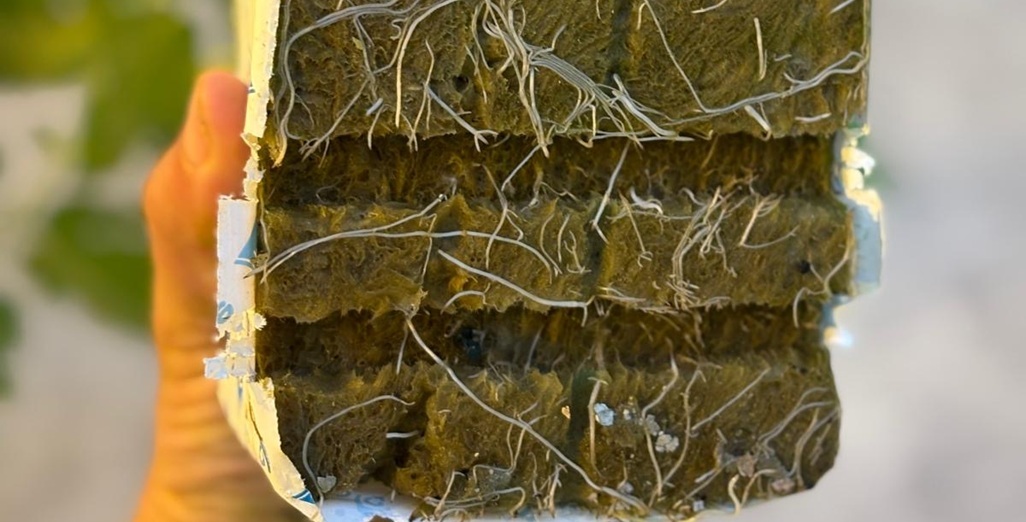
How stone wool and lighting can change the game for strawberry growers
An ever- higher number of strawberry growers are discovering the benefits of Controlled Environment Agriculture
February 23, 2026
Dissolved Oxygen – The Hidden Driver of Root Performance in Greenhouse Crops
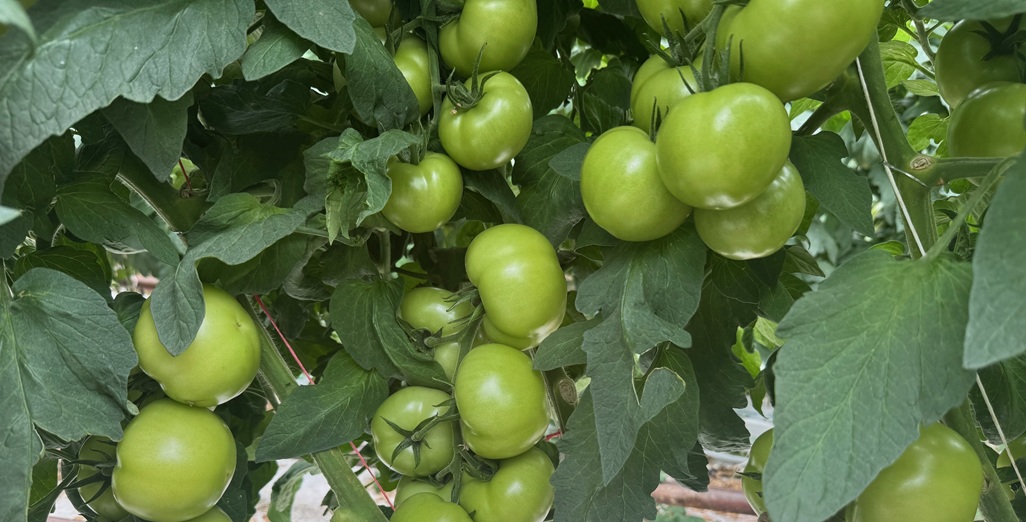
In high-tech greenhouse tomato and cucumber production, we carefully monitor EC, pH, radiation sums and irrigation strategy. However, one parameter that is often overlooked — yet can significantly influence plant performance — is dissolved oxygen (DO) in the nutrient solution.
February 10, 2026
Day-Length Decreasing = Time to Adjust Your Water Content
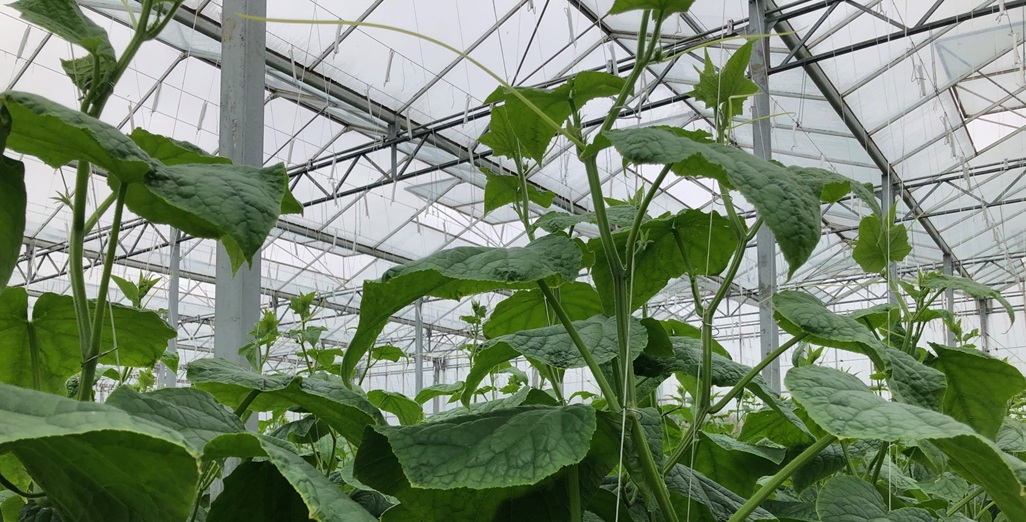
Amid the usual distractions of modern growing life, it’s easy to forget that Autumn 2026 is just around the corner. As day length shortens, now is the critical moment to review and adjust your irrigation strategy. Unlike previous years that brought prolonged dry spells or extreme heat, this year’s weather has been variable. Across the country, many regions are already seeing heavy rainfall and several cloudy days in a row. While this is great for replenishing water reservoirs, it also creates challenges once the sun returns: crops may wilt, and the temptation to overwater is high. My advice: keep substrate water content and EC close to pre-cloudy levels.
August 12, 2025
The Rise of Plant-Driven Irrigation
What if plants could tell us exactly when and how much water they need?
July 1, 2025
The BBRO Tackles Drought Risk in Sugar Beet Production
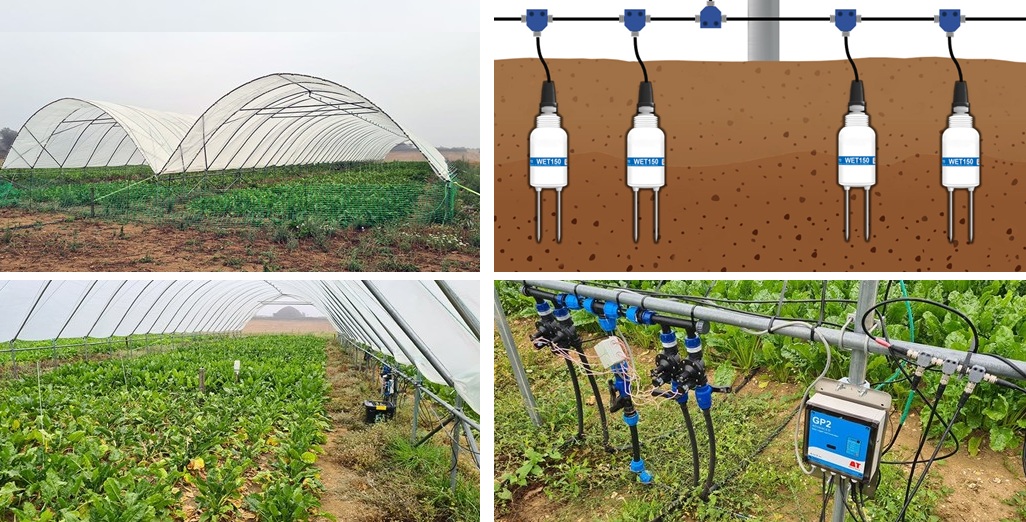
Delta-T Devices is providing WET150 multi-parameter soil sensors and GP2 advanced data loggers and controllers to the British Beet Research Organisation (BBRO) for use in important drought and water deficit research projects.
CLASSIFIED