

Sign up here to subscribe to the Grower2grower Ezine. Every two weeks you will receive new articles, specific to the protected cropping industry, informing you of industry news and events straight to your inbox.
12
Jan 2026
Jan 2026
Strong Winds on 30th December 2025
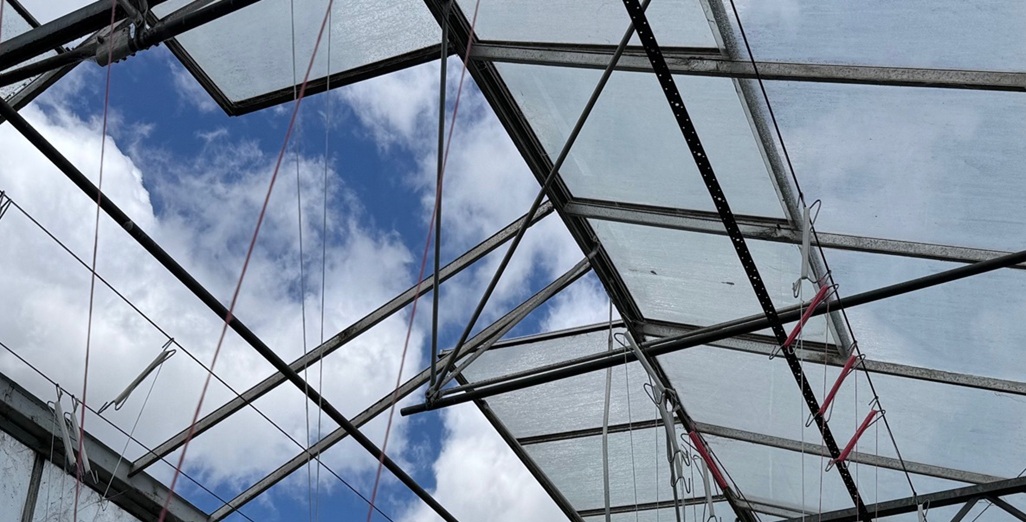
Damage to greenhouse reported
By Stefan Vogrincic
In late December 2025, a significant weather system brought heavy rain and strong winds across large parts of New Zealand, prompting multiple wind warnings and causing widespread disruption to services and infrastructure. At least one commercial greenhouse sustained damage, with multiple panes of glass blown out during the storm. As a result, all fruit from the affected area — and from surrounding zones within a defined distance of the broken glass — had to be picked and destroyed. It is critical that any fruit potentially exposed to glass contamination is never sent to market, regardless of appearance.
Fortunately, in this case the damage occurred overnight when the storm was at its peak and no staff were present on site. This highlights the importance of timing and risk management during extreme weather events. Where staff are working during unsettled conditions, growers should ensure wind-speed alerts and clear trigger points are in place to determine when it is no longer safe for people to remain inside a greenhouse. Many years ago, I was inside a greenhouse when a sudden mini-tornado struck without warning, ripping glass from the roof and lifting an internal door off its hinges. There was nowhere to run and everyone inside was left in an extremely vulnerable position. While modern greenhouses are typically fitted with safety glass, this is not always the case in older structures, where the risks are significantly higher and extra caution is required.
This event serves as a timely reminder for all growers to review their health and safety procedures, including storm response SOPs, staff evacuation protocols, and communication systems. Loose materials should be secured, glazing and structures regularly inspected, and backup power systems maintained to ensure climate control and safety systems remain operational during outages. With strong wind events becoming more frequent and weather patterns increasingly variable, resilience planning is no longer optional. It remains a key focus for New Zealand’s commercial greenhouse vegetable and flower industries as they work to protect staff safety, crop integrity, and long-term business viability.
CLASSIFIED
















Photo
Gallery






Subscribe to our E-Zine
More
From This Category
March 10, 2026
Australia’s horticulture sector has delivered a year of record‑breaking performance
Highest production value to date of $18.4 billion, up 6% on the previous year.
March 10, 2026
Energy saving through screens
A combination of screen use, screen quality, greenhouse climate requirements, and greenhouse equipment.
March 10, 2026
Heating Uncertainty Leaves Greenhouse Growers Searching for Answers
Waste oil supply changes force growers to reconsider long-term heating options ahead of winter. Two weeks ago I was alerted that one of the major recycled waste oil suppliers, based in the Auckland region, will soon stop supplying greenhouse growers. For one of my customers this came as a significant shock, particularly given that notice was given that deliveries will cease in the coming months –

February 10, 2026
MG Group partners with The Gut Foundation
Growing a healthier New Zealand together
January 27, 2026
Protected Cropping, Weather Extremes And Growth Potential
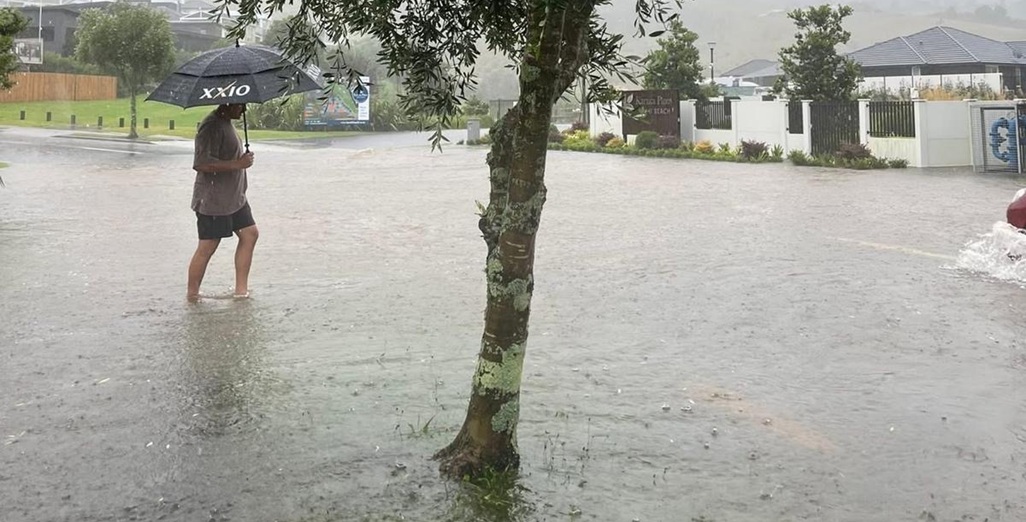
Extreme weather again highlights the role of protected cropping. During last week’s deluge across the North Island, significant damage is expected across many outdoor crops. Onions lying on the ground and attempting to dry will be particularly vulnerable, with prolonged saturation likely to result in quality losses and storage issues.
CLASSIFIED