

Sign up here to subscribe to the Grower2grower Ezine. Every two weeks you will receive new articles, specific to the protected cropping industry, informing you of industry news and events straight to your inbox.
23
Mar 2026
Mar 2026
The Carbon Difference Between LNG and Bioenergy: Does it Matter
As domestic gas supply declines and dry-year risks persist, New Zealand faces an important energy question. The challenge is not simply finding a replacement fuel, it is choosing an approach that supports long-term energy security while also reducing our carbon exposure.
By Insa Errey
Bioenergy offers a pathway that can help do both. It is a home-grown resource that can strengthen energy resilience, reduce emissions, support regional economies, and protect New Zealand’s long-term export competitiveness. As the energy system evolves, the distinction between short-term solutions and long-term strategies matters.
The Government’s decision to invest in an LNG import terminal reflects the reality that New Zealand’s gas network will remain part of the energy system for some time. LNG can help provide security during dry years when hydro generation is constrained and electricity demand is high. In that sense, LNG has a role to play.
Producing and delivering LNG involves extracting natural gas, liquefying it at extremely low temperatures, shipping it across oceans, regasifying it on arrival, and finally burning it for energy, releasing emissions at each stage. It can provide immediate supply security, particularly while domestic gas production declines and dry-year risks remain.
Bioenergy, by contrast, represents a longer-term transition. It is produced domestically from organic resources such as agricultural residues, food processing waste, wastewater biosolids, forestry residues and waste wood. Instead of allowing methane to escape into the atmosphere or leaving organic materials and forestry slash unused, bioenergy systems capture that potential and convert it into useful renewable energy.
Over time, this creates a very different carbon outcome. LNG introduces new fossil carbon into the atmosphere, while bioenergy works within the natural carbon cycle. LNG’s carbon intensity (the amount of carbon emitted when used to produce energy) is estimated at 140kg of CO2 per gigajoule more than the same amount of bioenergy. LNG can help manage short-term supply pressures, while bioenergy offers a pathway to reshape the system over the longer term as New Zealand moves toward its net-zero goals.
Biomass for dry year firming
LNG has often been pitched as fast solution to support generation during dry years when hydro lakes are low. However, bioenergy is a credible option for dry-year firming and could be used to reduce reliance on imported fuels over the longer term.
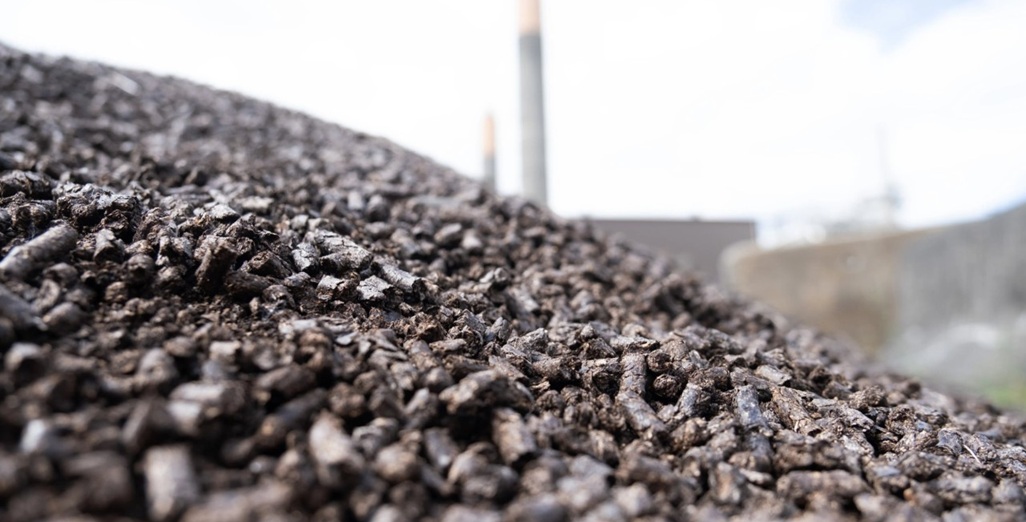
Dispatchable biomass fuels, particularly torrefied wood pellets, can be stored and used when generation is needed. Torrefied pellets have higher energy density, improved moisture resistance, and can be handled in a similar way to coal. Huntly Power Station is already demonstrating this capability and is actively exploring ways to develop domestic supply chains.
Importantly, biomass energy production does not need to compete with New Zealand’s high-value log exports or require a change in forestry practices. Most biomass feedstock comes from forestry slash, harvest residues, storm-damaged wood, sawmill offcuts, and other low-value materials that are often left unused.
Turning this material into energy creates value from what is currently a waste stream. It can also help reduce fire risks, support forest management, and generate new revenue streams for regional forestry communities.
Biomethane to strengthen manufacturing
Although LNG imports are not intended to be a gas substitute for manufacturing, in practice it is likely to be used that way. Biomethane offers a lower-carbon alternative.
Biomethane is produced through anaerobic digestion of organic waste streams such as agricultural residues, food processing waste, wastewater biosolids and municipal organics. The process captures methane that would otherwise escape into the atmosphere and upgrades it into a renewable gas that can be injected into existing gas networks. A major advantage as it can be used as a direct substitute for natural gas for continuous gas use.
Many parts of New Zealand’s manufacturing sector rely on high-temperature, continuous process heat, including dairy processing, meat rendering and food manufacturing. Electrification in these sectors can be technically complex or commercially challenging. For many manufacturers the choice is not between gas and electricity but between fossil gas and renewable gas.
Biomethane provides a practical pathway for these industries to reduce emissions while continuing to operate existing equipment and infrastructure. In contrast to fossil gas, biomethane can be continuously produced as long as the organic waste streams exist.
Carbon is now a trade issue
The carbon intensity of energy use in manufacturing is no longer only an environmental consideration. It is increasingly becoming a trade and competitiveness issue.
International markets are introducing stricter climate reporting and carbon disclosure requirements. The European Union’s Carbon Border Adjustment Mechanism begins its next phase in 2026, and multinational companies are increasingly asking suppliers to demonstrate emissions reductions across their supply chains.
This matters for New Zealand because dairy and meat products account for more than 40% of the country’s export value.
The carbon intensity of that energy becomes part of the final product’s footprint. Reducing those emissions can help maintain market access and protect New Zealand’s reputation as a producer of high-quality, sustainable food.
Bioenergy offers a practical way to achieve those reductions. It provides measurable and verifiable emissions improvements that exporters can demonstrate through certification schemes and reporting frameworks.
Let’s build a home-grown transformation
The discussion between LNG and bioenergy is not either-or, we can do both. LNG can provide short-term insurance in a hydro-dependent system during dry years, but it does not reduce long-term emissions. Bioenergy does. Where LNG is a resilience tool, bioenergy is a decarbonisation strategy.
Bioenergy is also a home-grown opportunity. It converts New Zealand’s organic resources into energy, fertiliser, regional jobs and export advantage, while supporting forestry and farming communities and reducing waste. This is not an apples-for-apples comparison with imported LNG: one maintains supply, the other transforms it.
LNG may help keep the system running in exceptional circumstances, but bioenergy lowers its carbon intensity every day. If New Zealand is serious about net zero and protecting its export economy, the fuels we use must deliver real carbon gains.
Insa Errey Bioenergy Association Board Member
Disclaimer: Insa Errey is also the Senior Manager of Future Fuels for Genesis Energy, which may buy LNG for electricity generation at Huntly Power Station if imports go ahead, and at the same time is supporting establishment of a sustainable domestic biomass supply chain.
CLASSIFIED


















Photo
Gallery








Subscribe to our E-Zine
More
From This Category
March 23, 2026
The Carbon Difference Between LNG and Bioenergy: Does it Matter
As domestic gas supply declines and dry-year risks persist, New Zealand faces an important energy question. The challenge is not simply finding a replacement fuel, it is choosing an approach that supports long-term energy security while also reducing our carbon exposure.
March 10, 2026
Energy saving through screens
A combination of screen use, screen quality, greenhouse climate requirements, and greenhouse equipment.
March 10, 2026
Heating Uncertainty Leaves Greenhouse Growers Searching for Answers
Waste oil supply changes force growers to reconsider long-term heating options ahead of winter. Two weeks ago I was alerted that one of the major recycled waste oil suppliers, based in the Auckland region, will soon stop supplying greenhouse growers. For one of my customers this came as a significant shock, particularly given that notice was given that deliveries will cease in the coming months –
February 23, 2026
New Zealand’s 2026 Energy Stock-Take – Part 2 – Natural Gas
New Zealand’s Nord Stream moment. That sucking-straw sound at the bottom of the glass and suddenly a gaping hole emerges in the New Zealand energy landscape
December 29, 2025
Best of 2025 – 79.2% decrease in Emission Trading Scheme (ETS) allocations for South Auckland Cucumber Grower
Chickens come home to roost for Greenhouse Growers
December 17, 2025
Ball Australia Boosts Climate Control with New Blackout Screen Upgrade
'Powerplants partnered with Ball Australia to deliver a full blackout screen replacement, supported by detailed mechanical, electrical, and irrigation work'
CLASSIFIED