



Sign up here to subscribe to the Grower2grower Ezine. Every two weeks you will receive new articles, specific to the protected cropping industry, informing you of industry news and events straight to your inbox.
8
Sep 2025
Sep 2025
Tomato grower warns the gas supply crisis could threaten the hothouse industry
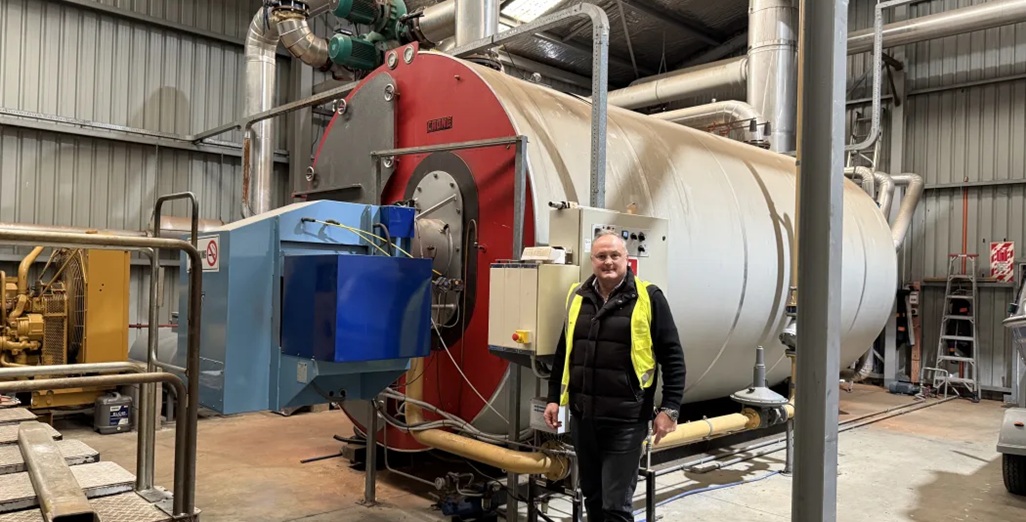
When NZ Hothouse built its tomato growing operation 25 years ago in South Auckland, hooking up to the nearby Maui pipeline was a key factor.
Article Source – RNZ
,
Tomato grower warns the gas supply crisis could threaten the hothouse industry, end thousands of jobs and send consumer prices even higher.
In an area where most growers were using the dirtier, less efficient coal, natural gas was cutting edge and the company brought in the latest technology from The Netherlands.
“It was the best in show in the world at the time,” said managing director Simon Watson.
The gas was abundant and inexpensive, and they were told it would last forever.
“Gas was incredibly cheap. Probably about a third of what we’re currently paying and obviously a fraction of what we’re going to be paying when the price goes up,” said Watson.
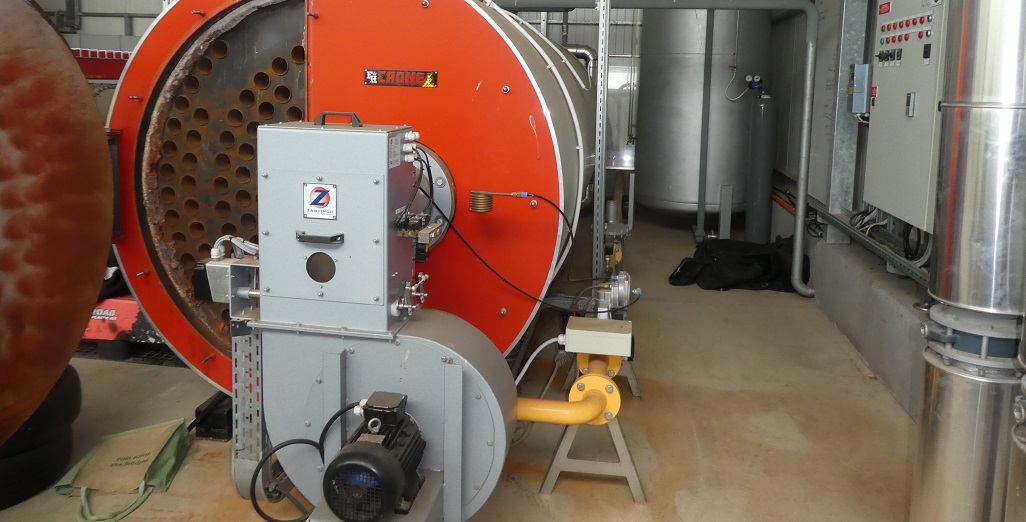
But the very lifeblood of the operation – the thing that keeps the plants warm through winter and feeds them much-needed carbon dioxide – is dying.
NZ Hothouse managing director Simon Watson says the gas supply crisis could end thousands of jobs. Photo: Sharon Brettkelly
Natural gas supplies are running out and as the shortage bites, the rising cost of it is threatening the future of some businesses.
It is likely to uproot NZ Hothouse’s operation and disrupt hundreds of workers.
Watson said it is the toughest problem he’s faced in his 31-year career there. But he had no idea of the widespread impact of it until a business leaders’ meeting a couple of weeks ago.
“Until we started looking into the depth of this crisis we had no idea how extensive this is and how far reaching it is. It’s going to have a massive effect on our society unless we can make some changes pretty quick,” he says.
He thinks most people are unaware of how many different industries depend on natural gas as their energy source.
“If New Zealanders walk through a supermarket and all the regular things that they buy, basically 80, maybe 90 percent of that product in a supermarket has some gas content.
NZ Hothouse’s 10-hectare hothouse in Drury grows nearly half a million tomatoes every year. Photo: Sharon Brettkelly
“Your meat industry, your dairy industry, your drinks industry, anything with sugar in it, your liquor industry, the breweries utilise a lot of gas. And then you look to the building industry, the glass industry, the aluminium industry, the timber industry and then you look beyond that to old people’s residential homes, schools, hospitals, local bodies, heating swimming pools.”
Today, Watson takes The Detail on a tour of its 10-hectare hothouse packing and distribution operation in Drury, where it grows nearly half a million tomatoes every year.
His company first got an inkling of a shortage about three years ago when the gas producers said the supply had become more unstable.
“At that time it was a short term issue which they fixed. But it was a bit of a heads up as to what was going on,” he said.
But this year it was revealed that gas reserves had more than halved in just four years. And the news keeps getting worse. Just last week the Ministry of Business, Innovation and Employment (MBIE) warned that gas supply may be falling faster than previously expected.
Watson said it has forced his company to look urgently at alternative energy sources and it will probably relocate to a site where it can tap into geothermal energy, such as Taupō.
NZ Hothouse managing director Simon Watson Photo: Sharon Brettkelly
He thought the company would have five to 10 years more at the current site, now he thinks it will be three years.
But much of the industry is in the same boat, with glasshouses or covered crop operations all around 25 years old, he said. NZ Hothouse’s two plants make up 19 hectares of the 200-hectare covered crop sector in the upper North Island, and he predicts that many will have to cut back or close down because they can’t afford to pay for the gas.
Watson said the government and the energy industry have nine months to come up with a solution, before the high energy demands of next winter
Article Source https://www.rnz.co.nz/news/business/571148/the-industry-killing-crisis
CLASSIFIED



















Photo
Gallery













Subscribe to our E-Zine
More
From This Category
March 10, 2026
Energy saving through screens
A combination of screen use, screen quality, greenhouse climate requirements, and greenhouse equipment.
March 10, 2026
Heating Uncertainty Leaves Greenhouse Growers Searching for Answers
Waste oil supply changes force growers to reconsider long-term heating options ahead of winter. Two weeks ago I was alerted that one of the major recycled waste oil suppliers, based in the Auckland region, will soon stop supplying greenhouse growers. For one of my customers this came as a significant shock, particularly given that notice was given that deliveries will cease in the coming months –
February 23, 2026
New Zealand’s 2026 Energy Stock-Take – Part 2 – Natural Gas
New Zealand’s Nord Stream moment. That sucking-straw sound at the bottom of the glass and suddenly a gaping hole emerges in the New Zealand energy landscape

December 29, 2025
Best of 2025 – 79.2% decrease in Emission Trading Scheme (ETS) allocations for South Auckland Cucumber Grower
Chickens come home to roost for Greenhouse Growers

December 17, 2025
Ball Australia Boosts Climate Control with New Blackout Screen Upgrade
'Powerplants partnered with Ball Australia to deliver a full blackout screen replacement, supported by detailed mechanical, electrical, and irrigation work'
December 17, 2025
Why energy is now a strategic risk (2025 Grower2Grower overview of energy and looking forward)
What Tomato, Cucumber, Capsicum and Capsicum Growers Need to Know (And other heated greenhouse crops). Energy has shifted from a manageable operating cost to a strategic production risk for New Zealand’s protected-cropping sector. In 2025, growers are facing a convergence of structural changes that directly affect whether heat is available when it is needed, not just what it costs.
CLASSIFIED