
Sign up here to subscribe to the Grower2grower Ezine. Every two weeks you will receive new articles, specific to the protected cropping industry, informing you of industry news and events straight to your inbox.
10
Sep 2019
Sep 2019
Understanding Absolute Humidity
Differences in Absolute Humidity are the driving force for the abduct of moisture
Early in July, Apex Greenhouses hosted growers and consultants to a presentation from Ton Habraken, Greenhouse Climate Consultant from Svensson and Bert-Jan Nolden, Commercial Manager at Hoogendoorn Growth Management, in regards to Growing by Plant Empowerment (GPE).
Ton and Bert-Jan were promoting the new book: Plant Empowerment, The Basic Principles. The book is based on a combination of both physical and physiological principles. I was particularly interested with the focus on Absolute Humidity (AH). I want to understand how this knowledge can be applied to improve growing techniques and be used to the grower’s advantage.
To understand exactly how to take advantage of AH rather than RH, which is humidity relative to temperature, is key. AH it seems could be a far better way of exchanging moisture without the risk of condensation forming on your plants, which in turn could cause diseases. By using a climate screen for example this process of expelling moisture by using this principal has a lot of merit:
In New Zealand, it has been accepted that there is no real need for climate screens, as our climate especially for growing tomatoes or cucumbers in the top half of the country is seen as being mild. Many capsicum growers have climate screens to reduce the effect of high radiation but the thinking behind that was possibly not for humidity control. If you are considering building or retrofitting a greenhouse and including a climate screen it should not be just for energy purposes. I advise you to read the sections about AH in the GPE-book and contact Ton to seriously consider the climate screen you need.
A list of advantages to having a screen for controlling AH are:
- Get insight in if there is the possibility to discard moisture
- Discard moisture in the most energy efficient way
- Reducing condensation on to the crop
- Reducing diseases
- Monitoring the exhaust of moisture by ventilation vs the evaporation of the crop
- See directly if the taken actions have the desired effect on the humidity
- Decrease the use of a minimum pipe
- Achieve a more homogeneous greenhouse climate
AH explanation: the difference between AH inside and outside the greenhouse in g/kg or g/m3 air determines the amount of moisture that is expelled by ventilation. The bigger the difference, the less air exchange is needed for the same effect on dehumidification. In cases where the difference is very small, moisture discharge by ventilation is difficult or even impossible
The amount of moisture that is transferred per m3 air is determined by the difference in Absolute Humidity between outside and inside air. Differences in Relative Humidity can be misleading unless inside and outside temperatures are equal
Absolute humidity (AH) is the measure of water vapor (moisture) in the air, regardless of temperature. It is expressed as grams of moisture per cubic meter of air (g/m3).
The maximum Absolute Humidity of warm air at 30°C/86°F is approximately 30g of water vapor – 30g/m3. The maximum Absolute Humidity of cold air at 0°C/32°F is approximately 5g of water vapor – 5g/m3.
Relative Humidity also measures water vapor but RELATIVE to the temperature of the air. It is expressed as the amount of water vapor in the air as a percentage of the total amount that could be held at its current temperature.
Warm air can hold far more moisture than cold air meaning that the Relative Humidity of cold air would be far higher than warm air if their Absolute Humidity levels were equal.

Ton's presentation also covered – High Grade Light Diffusion = Higher Photosynthesis. But this is for another article.
If you would like to purchase the Plant Empowerment book you can visit the website: https://www.plantempowerment.com/books/plant-empowerment-the-basic-principles/
If you want to know more about how Svensson climate screens can help improve your growing climate you can contact Ton Habraken by email: ton.habraken@ludvigsvensson.com
I appreciate your comments. Please feel free to comment on the grower2grower Facebook page:
https://www.facebook.com/StefanGrower2grower/
Article Written by Stefan Vogrincic with contribution from Ton Habraken.
Article Edited by Marie Vogrincic, Editor, Grower2Grower
CLASSIFIED





Subscribe to our E-Zine
More
From This Category

February 10, 2026
MG Group partners with The Gut Foundation
Growing a healthier New Zealand together
January 27, 2026
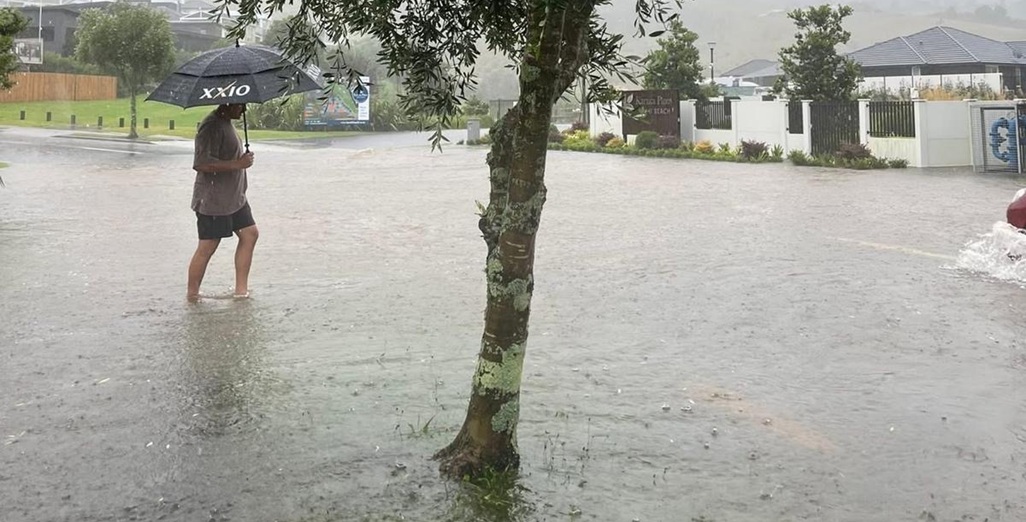
Protected Cropping, Weather Extremes And Growth Potential
Extreme weather again highlights the role of protected cropping. During last week’s deluge across the North Island, significant damage is expected across many outdoor crops. Onions lying on the ground and attempting to dry will be particularly vulnerable, with prolonged saturation likely to result in quality losses and storage issues.
January 27, 2026
Agrivoltaics in Greenhouses Turning Sunlight into Energy and Crops
The EU is rapidly increasing its renewable energy targets, with solar power playing a central role in achieving these goals
January 12, 2026
Response to fruit fly find in Mt Roskill continues
The recent detection of a Queensland fruit fly in Mt Roskill and the resulting biosecurity controls on fresh produce movement highlight the very real risk this pest poses to New Zealand’s horticulture sector.
CLASSIFIED