

Sign up here to subscribe to the Grower2grower Ezine. Every two weeks you will receive new articles, specific to the protected cropping industry, informing you of industry news and events straight to your inbox.
13
Jul 2026
Jul 2026
Why Botrytis has become such a challenge this winter
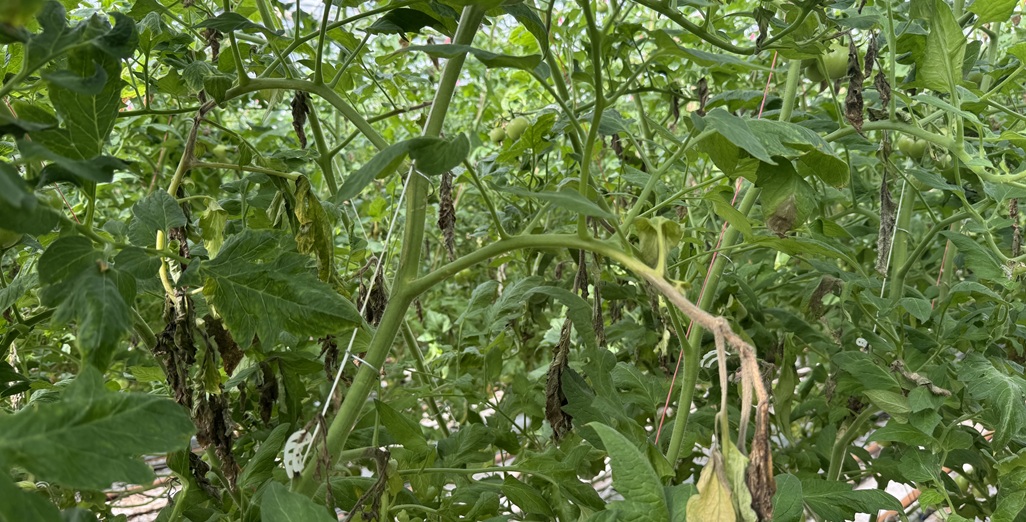
The objective is not to grow a vegetative crop or a weak generative crop. The objective is to grow a balanced crop with enough vigour to support the fruit load while maintaining healthy leaf quality.
By Stefan Vogrincic
Many tomato growers will agree that Botrytis (grey mould) has been particularly aggressive this winter. Once it has established itself in a crop, it can spread rapidly, resulting in repeated leaf removal, increased labour and, in severe cases, infection moving back towards the stem.
The important point, however, is that Botrytis is often the final link in a chain of events, rather than the original problem. By the time the disease becomes obvious, the crop has usually been under physiological stress for several weeks.
One area observed this season provides a good example of how a series of relatively small factors combined to create ideal conditions for Botrytis to flourish. While every greenhouse is different, the principles are relevant to many winter tomato crops.
It started with chlorosis
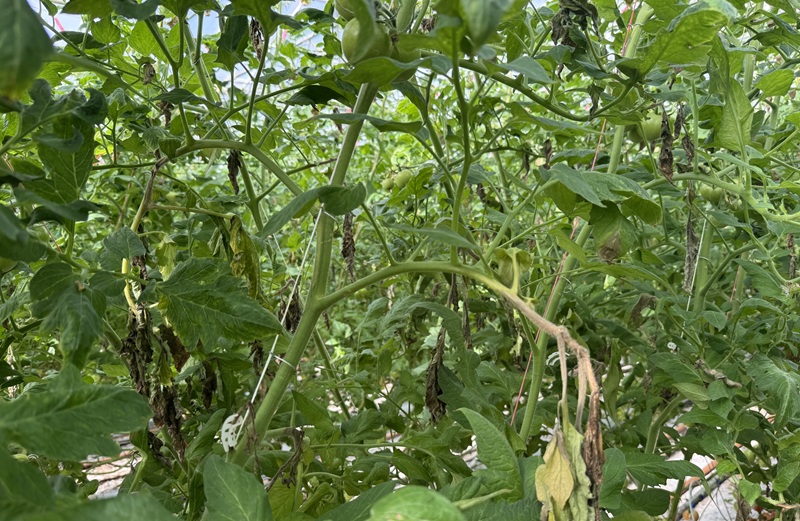
The first symptoms were interveinal chlorosis on the younger leaves, which later progressed to marginal tip burn.
Cold winter mornings significantly reduce root activity. Even where root systems appear healthy, nutrient uptake slows when root-zone temperatures remain low.
At the same time, the root-zone pH was consistently higher than ideal. Elevated pH reduces the availability of important micronutrients such as iron and manganese, both of which are essential for chlorophyll production and healthy leaf development.
The combination of reduced root activity and elevated pH resulted in leaves that were physiologically weaker and less able to withstand environmental stress.
Botrytis simply exploited the damage
Once leaf margins developed tip burn, Botrytis found its opportunity.
Grey mould is an opportunistic pathogen. It readily colonises damaged or dying tissue before progressively moving back through the leaf and, in some cases, towards the petiole and stem.
At this stage, growers often find themselves manually removing infected leaves simply to stay ahead of the disease.
This is why it is important to remember that Botrytis is rarely the first problem. More often, it is taking advantage of tissue that has already been weakened by environmental or nutritional stress.
Plant vigour determines resilience
One of the strongest observations from this season is that crops with reduced vigour have generally struggled more once Botrytis becomes established.
Plant vigour is influenced by many interacting factors. Heavy fruit load, prolonged periods of low light, cold root zones, nutrient availability and overall plant balance all place demands on the crop. When several of these occur together, the plant’s ability to produce and maintain healthy leaf tissue is reduced.
Conversely, maintaining good vigour allows the crop to continue producing healthy leaves, replace older foliage and better tolerate periods of environmental stress.
This doesn’t mean growing a vegetative crop! Dense canopies create their own Botrytis challenges through poor air movement and prolonged leaf wetness. Equally, crops carrying excessive fruit load can lose vigour and become increasingly susceptible to physiological disorders.
The objective is not to push the crop in one direction or the other. It is to maintain sufficient vigour to support the fruit load while producing healthy, resilient foliage throughout winter.
Water management also plays a part
Water management is another factor that deserves attention during winter.
Where substrates remain wetter than the crop requires, evaporation from the substrate contributes additional moisture to the greenhouse atmosphere. Combined with reduced ventilation and shorter days, this increases relative humidity and extends periods of leaf wetness—conditions that strongly favour Botrytis infection.
Similarly, consistently low drain EC can indicate that irrigation is slightly ahead of plant demand during periods of low radiation.
Every greenhouse, substrate and irrigation strategy is different, so there is no single target that suits every crop. However, winter irrigation should always aim to maintain an active root zone while avoiding excessive water availability.
The energy dilemma
Perhaps the greatest challenge for growers today is that many of the solutions require energy.
Maintaining adequate minimum pipe temperatures throughout the day and night helps keep roots active, encourages transpiration, improves micronutrient uptake and assists with drying the crop.
Unfortunately, today’s energy prices mean many businesses are forced to carefully balance heating costs against crop performance.
Reducing heat may save energy in the short term, but it can also lead to higher humidity, slower nutrient uptake, prolonged leaf wetness and increased disease pressure. Finding that balance has become one of the biggest challenges facing greenhouse tomato production.
Practical lessons from this winter
This season has reinforced several important principles:
- Monitor root-zone pH carefully, particularly during winter when micronutrient uptake is already under pressure.
- Remember that cold root zones and elevated pH work together to reduce the availability and uptake of iron and manganese.
- Maintain good plant vigour by balancing fruit load with the plant’s ability to support it.
- Treat chlorosis and tip burn as early warning signs rather than isolated symptoms.
- Avoid excessive water availability during periods of low light and low transpiration.
- Manage humidity wherever possible through irrigation timing, ventilation and heating.
- Remove infected leaves promptly to reduce the amount of Botrytis inoculum within the crop.
Final thoughts
One of the biggest lessons from this winter is that successful Botrytis management starts long before the first grey spores appear.
When cold conditions reduce root activity, elevated pH limits micronutrient availability, leaves become chlorotic, tip burn develops and humidity remains high, the disease is simply taking advantage of a crop that has already lost some of its resilience.
Breaking just one or two links in that chain can significantly reduce disease pressure. Growers who focus on maintaining healthy roots, balanced plant vigour, appropriate irrigation and good environmental control are far more likely to prevent Botrytis becoming a major problem than those relying solely on fungicides after infection has already occurred.
You May Also Like
🍅 Winter Bites – Low Light, High Disease Pressure and the Importance of Keeping Crops Generative
https://www.grower2grower.co.nz/winter-bites/
🍅 Botrytis Alert: Key Strategies to Minimize Losses
https://www.grower2grower.co.nz/botrytis-alert-key-strategies-to-minimize-losses/
🍅 Leaf Mould – Cladosporium
https://www.grower2grower.co.nz/leaf-mould-cladosporium/
🍅 A Crop on the Cusp of Ruin by Leaf Mould and the Return of Psyllid Yellows
https://www.grower2grower.co.nz/a-crop-on-the-cusp-of-ruin-by-leaf-mould-and-the-return-of-psyllid-yellows/
🍅 Ghost Spotting – Control Advice
https://www.grower2grower.co.nz/ghost-spotting/
CLASSIFIED

















Photo
Gallery






Subscribe to our E-Zine
More
From This Category
July 13, 2026
Why Botrytis has become such a challenge this winter
The objective is not to grow a vegetative crop or a weak generative crop. The objective is to grow a balanced crop with enough vigour to support the fruit load while maintaining healthy leaf quality.
March 10, 2026
Where Does Fusarium Sit on Your Priority List?
When discussing crop health during technical strategy meetings, Fusarium often does not sit particularly high on the list of priorities.
December 29, 2025
Best of 2025 – Roam presentation on hygiene protocols for greenhouses and biosecurity, Pukekohe, New Zealand
Recently I attended a superb presentation by Ivan Casteels, Roam Technology discussing biosecurity, hygiene, and ToBRFV.

July 14, 2025
Calling on suppliers to do the right thing (Hygiene)
"Every part of the sector has a role to play in Biosecurity" (Dinah Cohen, GM TomatoesNZ) 공급업체들에게 올바른 행동을 촉구합니다
July 1, 2025
Botrytis Alert: Key Strategies to Minimize Losses
Following Blight, Botrytis now becomes the main threat — act early to avoid compounding issues. Energy costs are currently a major burden for greenhouse growers. As a result, many are forced to make difficult decisions about how much energy to invest in climate control........

June 2, 2025
Blight Hits South Auckland – One Grower Severely Affected
Blight Doesn’t Wait — Neither Should You
CLASSIFIED