

Sign up here to subscribe to the Grower2grower Ezine. Every two weeks you will receive new articles, specific to the protected cropping industry, informing you of industry news and events straight to your inbox.
A Perfect Storm for Crop Performance
(Tomatoes) By Stefan Vogrincic
Recent weather patterns — particularly across the North Island — have delivered another period of warm, humid conditions combined with persistent rainfall. While not unusual for autumn, the intensity and duration of these conditions are creating compounding challenges for greenhouse growers.
Following on from earlier reports around fruit set, I’ve observed a noticeable decline in fruit quality and consistency in trusses currently or recently set. This appears to be driven not by a single issue, but by a combination of factors creating a negative spiral:
- Weather: Unseasonably warm nights and rapidly declining light levels
- Humidity: High moisture levels reducing pollen viability and fruit set
- Whitefly pressure: Continued migration from outside due to mild temperatures
- Disease: Increased incidence of fungal diseases such as botrytis and blight in tomatoes
- Reduced heating: Lower energy use slowing plant activity and delaying fruit development
For tomatoes in particular, high humidity leads to “sticky pollen,” reducing effective pollination and fruit set. At the same time, fruit is remaining on the plant longer due to slower ripening, increasing load pressure on the head and affecting subsequent truss development.
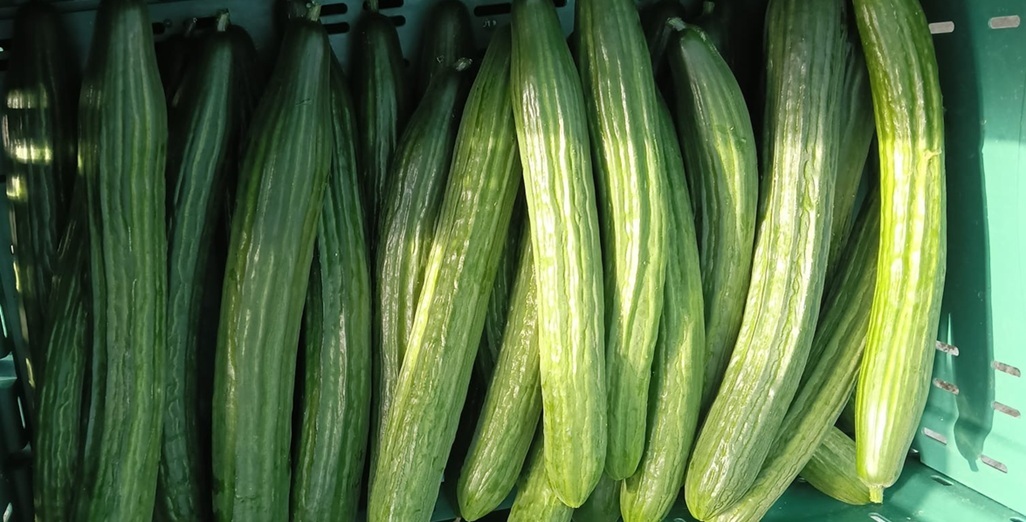
Cucumbers have generally held up better, provided day temperatures have been maintained and a sufficient day/night differential achieved. However, disease pressure remains a key risk in these conditions.
Energy Constraints and the Risk of Reduced Dehumidification:
Ongoing global energy uncertainty — including geopolitical tensions — continues to impact fuel availability and cost. For some growers, recent issues with waste oil supply have compounded this further.
In response, many are understandably reducing heating or conserving fuel for later in the season (e.g. frost protection). While this is a practical decision, it comes with risk.
Heating in autumn is not just about temperature — it is critical for moisture management and plant activity. Reducing or eliminating heating significantly limits dehumidification, increasing the risk of:
- Poor fruit set
- Increased disease pressure
- Reduced calcium uptake
- Slower crop turnover and reduced yield
The impact of these decisions may not be immediate but is likely to become evident in 6–8 weeks’ time through reduced production and fruit quality.
For growers with alternative heating sources, maintaining a minimum pipe temperature remains essential to keep the crop active and balanced.
Practical Strategies to Manage Risk
For growers needing to minimise energy use, the focus should shift to managing risk as effectively as possible:
- Strengthen Disease Prevention
High humidity creates ideal conditions for fungal diseases such as botrytis. A proactive approach is essential.
- Consider biological protectant products, such as those available through Horticentre (e.g. TripleX range), to reduce disease pressure
- Maintain regular spray intervals — prevention is far more effective than cure in these conditions
- Maintain Air Movement
Even without heating, air exchange remains critical.
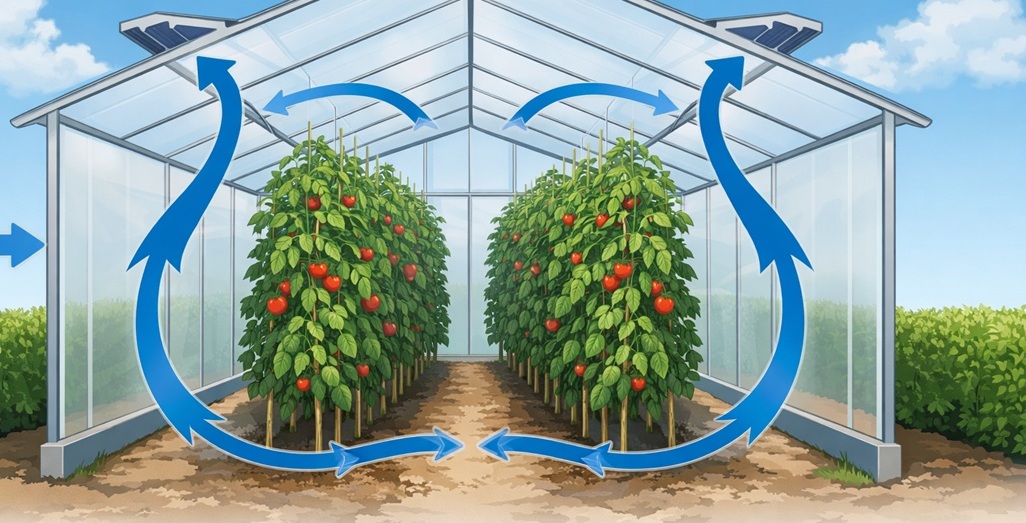
- Use light venting strategies to promote airflow and remove excess humidity (see image below)
- Ensure minimum vent settings are active, particularly on the windward side
- Adjust Irrigation Strategy
With reduced transpiration, plants require less water.
- Reduce irrigation frequency and volume
- Avoid excessive runoff, which can further cool and saturate the root zone
- Monitor substrate EC — lower uptake may cause EC to rise if not managed carefully
- Manage Crop Load
If fruit is not moving due to lower energy input, plants can become overloaded.
- Review truss pruning strategy
- Avoid carrying excessive fruit load that can weaken the head and reduce future set
- Support Calcium Uptake
Calcium movement in the plant is driven by transpiration and flow.
- Under low transpiration conditions, calcium deficiency symptoms (e.g. leaf mottling, tip burn) may appear
- Introducing small amounts of heat at the start and end of the day can stimulate transpiration and improve calcium distribution.
Looking Ahead
What is ultimately needed is a return to dry, sunny conditions to reset crop balance and reduce disease pressure. However, this may also bring cooler southerly changes — creating a different set of challenges.
As always, the key is balance. Reducing inputs may be necessary, but understanding the consequences and managing the associated risks will be critical to maintaining crop performance through autumn.
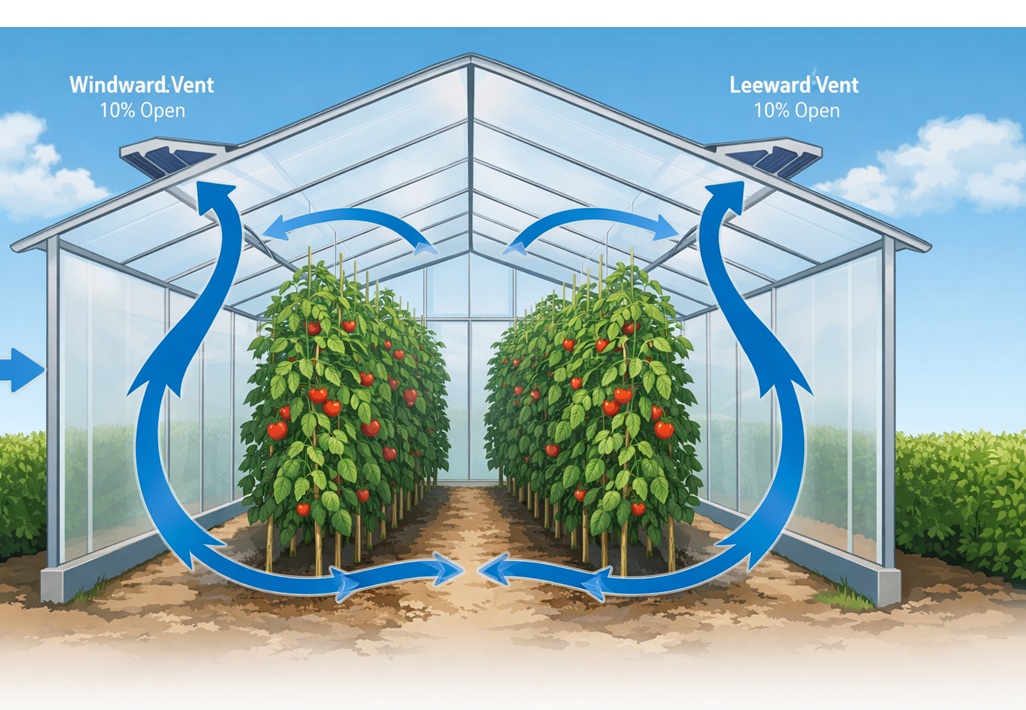
See example above. Note, it doesn’t need to be 10% venting — even small amounts of venting on both the windward and leeward sides can create a naturally positive airflow through the house.
CLASSIFIED

















Photo
Gallery




Subscribe to our E-Zine
More
From This Category
April 20, 2026
Autumn Challenges: Managing Humidity, Energy Constraints and Crop Balance
A Perfect Storm for Crop Performance
April 7, 2026
Energy Resilience for Greenhouse Horticulture: Electricity at the Core (not just for greenhouse horticulture but NZ Inc?)
Real opportunity for long-term resilience lies in electricity and bioenergy for growers

April 7, 2026
Geothermal Strategy released MBIE
From the Ground Up: A strategy to unlock New Zealand's geothermal potential - March 2026
March 23, 2026
The Carbon Difference Between LNG and Bioenergy: Does it Matter
As domestic gas supply declines and dry-year risks persist, New Zealand faces an important energy question. The challenge is not simply finding a replacement fuel, it is choosing an approach that supports long-term energy security while also reducing our carbon exposure.

March 10, 2026
Energy saving through screens
A combination of screen use, screen quality, greenhouse climate requirements, and greenhouse equipment.
March 10, 2026
Heating Uncertainty Leaves Greenhouse Growers Searching for Answers
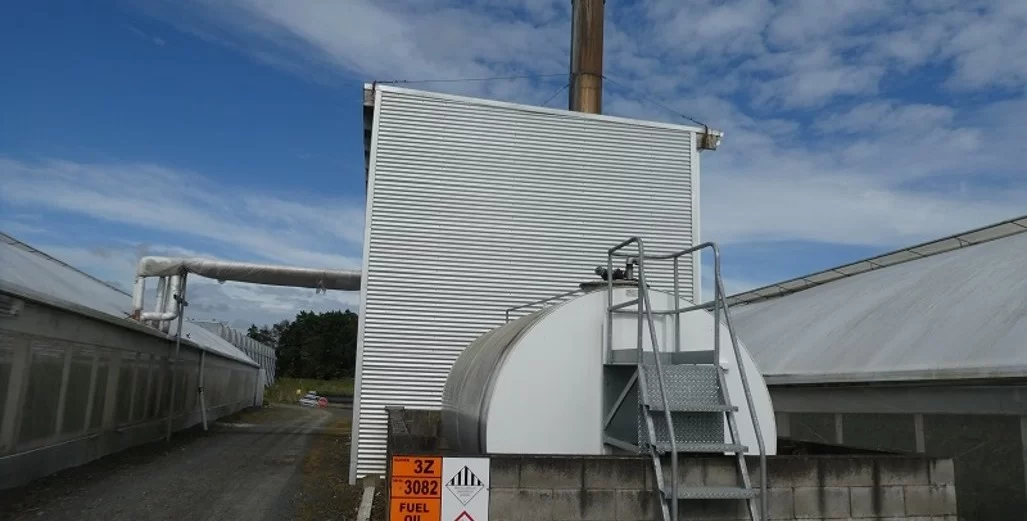
Waste oil supply changes force growers to reconsider long-term heating options ahead of winter. Two weeks ago I was alerted that one of the major recycled waste oil suppliers, based in the Auckland region, will soon stop supplying greenhouse growers. For one of my customers this came as a significant shock, particularly given that notice was given that deliveries will cease in the coming months –
CLASSIFIED