

Sign up here to subscribe to the Grower2grower Ezine. Every two weeks you will receive new articles, specific to the protected cropping industry, informing you of industry news and events straight to your inbox.
19
Jun 2023
Jun 2023
The best way to increase consumption is to make produce more affordable
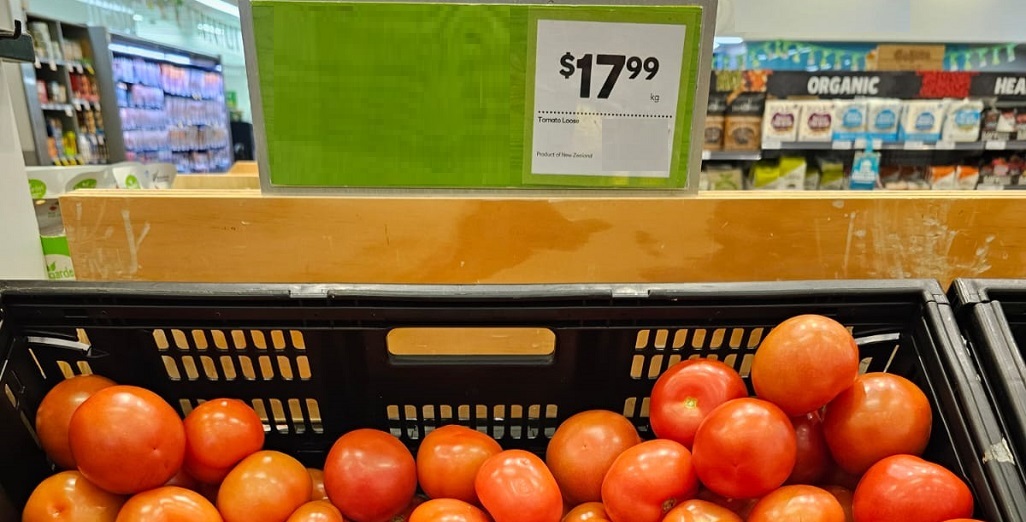
Greenhouse vegetable prices have risen sharply in previous weeks and could go even higher.
On Saturday night, on the TV one news, there was a report on the cost of tomatoes at present, and how expensive they are (and will possibly continue to rise in coming weeks). The reasons given for the increase in price is due to a shortage in supply, which has been put down to recent harsh weather conditions and crop losses. These are part of the reason, but other significant factors are at work. The cost of energy and substantial increase in operational expenses is making it difficult for growers to justify maintaining inputs, such as the optimal temperatures required (many may not be heating at all). Crops are in greenhouses, however, if the inputs are less, the output is less. An explanation to the general consumer is that depending on the variety of tomato, maintaining a night-time temperature average of 15-16 degrees is common for this time of the year and the winter light levels. However, tomatoes can survive at much lower temperatures. Some growers may only be heating just enough to prevent frost damage.
When temperatures are lowered production slows (as above less input equals less output). Three weeks ago, when the price of tomatoes was $3.50 kg in the market (very marginal in terms of the cost of production) growers would have thought, we cannot afford to heat at those prices. Fast forward three weeks and they are over $10 kg in the market, it is cold, and the production is not there. Growers may now decide to turn the heaters back up, but you can’t catch up what is lost.
Energy Crisis and Instability:
In previous weeks, I have been assisting small to medium sized growers with new natural gas supply contracts. For one grower, only one retailer offered a new contract to supply Natural Gas. The new contract price has risen an average 13%, which is tied to an annual CPI adjustment. With no other option the contract, which had an expiry date, was agreed to. Couple that with the huge increase in labour, the increases in consumables and you understand why growers are trying to find savings. With the market very unstable it means that when they make a ‘growing’ decision it is exceedingly difficult to reverse and then ‘magic up’ fruit when the market is short.
Fuel Transition:
For small to medium sized growers looking to transition to renewable fuels, it is becoming increasingly difficult even with government subsidies. The age of the properties, retrofitting and being in a financial position to change is daunting. Energy screens, which have high light transmission properties, are a fitting example of how growers can reduce energy cost yet maintain ideal temperatures. However, the cost to install a screen has doubled in the last 3-4 years as the cost of shipping and labour has increased. So even if there was a 50% subsidy to retrofit and install a screen it will still cost the grower the same it would have only 3 years ago without a subsidy. In other words, it will be harder for them to justify. Growers may simply decide to only grow in the warmer months or take a risk on the winter ambient temperatures.
Pepino Mosaic Virus (PepMV):
A serious virus, Pepino Mosaic Virus, which was detected in the country nearly two years ago is also having an unknown disruption to winter production. The strain we have is sensitive to low light levels and expresses itself to a higher degree in the winter months. As there has been a lack of consensus to investigate introducing inoculations to New Zealand – we will continue to sit in limbo with the virus.
Consequences:
The carrot to change to renewables is fantastic, however, the big stick chasing growers will cause disruption for some time yet. In the meantime, consumers will either pay higher prices or soon they may have the choice of buying Australian tomatoes. The best way to increase consumption is to make the product more affordable, the problem is the cost and the tax involved in growing is making that increasingly difficult in the Winter.

Article compiled by Stefan Vogrincic
All Article’s checked and edited by Marie Vogrincic. For all media releases please send to marie@grower2grower.co.nz or upload directly: https://www.grower2grower.co.nz/article-form/
I appreciate your comments. Please feel free to comment on the grower2grower Facebook page or email: stefan@grower2grower.co.nz
CLASSIFIED



















Photo
Gallery
















Subscribe to our E-Zine
More
From This Category
April 20, 2026
Autumn Challenges: Managing Humidity, Energy Constraints and Crop Balance
A Perfect Storm for Crop Performance
April 7, 2026
Energy Resilience for Greenhouse Horticulture: Electricity at the Core (not just for greenhouse horticulture but NZ Inc?)
Real opportunity for long-term resilience lies in electricity and bioenergy for growers

April 7, 2026
Geothermal Strategy released MBIE
From the Ground Up: A strategy to unlock New Zealand's geothermal potential - March 2026
March 23, 2026
The Carbon Difference Between LNG and Bioenergy: Does it Matter
As domestic gas supply declines and dry-year risks persist, New Zealand faces an important energy question. The challenge is not simply finding a replacement fuel, it is choosing an approach that supports long-term energy security while also reducing our carbon exposure.

March 10, 2026
Energy saving through screens
A combination of screen use, screen quality, greenhouse climate requirements, and greenhouse equipment.
March 10, 2026
Heating Uncertainty Leaves Greenhouse Growers Searching for Answers
Waste oil supply changes force growers to reconsider long-term heating options ahead of winter. Two weeks ago I was alerted that one of the major recycled waste oil suppliers, based in the Auckland region, will soon stop supplying greenhouse growers. For one of my customers this came as a significant shock, particularly given that notice was given that deliveries will cease in the coming months –
CLASSIFIED