
Sign up here to subscribe to the Grower2grower Ezine. Every two weeks you will receive new articles, specific to the protected cropping industry, informing you of industry news and events straight to your inbox.
14
Jul 2023
Jul 2023
Australasia’s largest greenhouse builder sells minority stake to Dutch CEA player GreenV
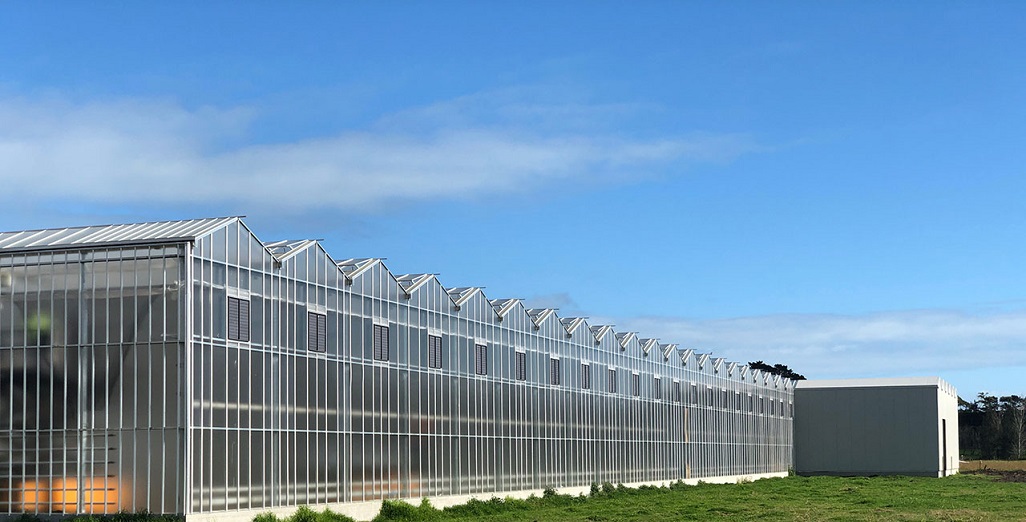
New Zealand and Australia’s largest commercial greenhouse construction company, Apex Greenhouses, has agreed to sell a minority stake to GreenV B.V, a Dutch-based aggregator of smart greenhouse technology suppliers around the world.
Apex Greenhouses’ Australian Chief Executive, Folco Faber, said GreenV had taken the minority interest in line with its vision to provide world-leading complete greenhouse projects, along with sharing its knowledge and international experience.
South Australian-based Mr Faber said it had been a well-considered decision to partner with GreenV, which enabled Apex Greenhouses to leverage GreenV’s access to cutting-edge automation and emissions-reducing technologies in a rapidly advancing Controlled Environment Agriculture (CEA) industry.
“Projects are becoming larger and more complex,” Mr Faber said. “Our typical client 10 years ago was a family operation and while they are still an important part of our customer base, we see larger corporate interests entering the space with heavy investment worldwide from PE, super funds and listed companies. High-tech greenhouse projects are capital-intensive, so the monetary injection is needed if we are to feed the planet.”
Apex Greenhouses constructs large scale commercial structures for the horticultural industry in Australia and New Zealand, including university R&D projects, Botanic Gardens and packing sheds. Its largest project to date has been a 130,000sqm greenhouse in Victoria.
Mr Faber said the CEA industry was experiencing rapid growth around the world, with up to 30 per cent growth per year anticipated in the Asia Pacific region by 2026. Much of that growth, Mr Faber said, was predicated on adapting to climate change, the need for more certainty in growing conditions and the need to increase volumes to cater for a growing population.
“We can see many examples locally as to why things are naturally moving towards indoor and greenhouse based growing – extreme weather patterns, scarce labour, higher input costs for water/energy/fertiliser are all causing customers to look for more efficient solutions,” he said.
“It is well known within the industry that glasshouse-grown produce uses one fifth of the water of field-grown produce and only one tenth of the relative land area per kilogram of produce. In the last 12 months instances of $10 lettuces, and with strawberries currently at $7.50 per punnet, high prices are only going to become more prevalent unless more produce can be grown in controlled environments.

“We were at a crossroads as to whether we continued to compete with much larger, better resourced groups of companies and make large investments into our own R&D activities, or partner with one of these much larger groups and leverage off the knowledge and expertise they already had.
“Partnering with GreenV gives us a seat at the table, and being a minority investment it allows General Manager of New Zealand Operations James Harris and I to retain full control of the day-to-day running of the business. Our extremely hard-working staff are now part of something much larger and this will open doors for further personal growth and development of all employees.
“This is also going to enable us to greatly improve our offerings to customers. We will have a key focus on bringing customers efficiencies in terms or energy usage, including more efficient and lower carbon footprint energy generation for food production and also automation as a way of improving labour efficiencies.”
Formerly Faber Glasshouses, Apex Greenhouses was founded in New Zealand by Dutch immigrant Leo Faber in the late 1970s. Leo quickly moved from building greenhouses, to manufacturing steel-framed greenhouses locally, mimicking the Dutch designed ‘Venlo’ glasshouse structures. Mr Faber and Mr Harris have led the Australian and New Zealand operations for the past 15 and 12 years respectively.
Apex Greenhouses retains a local manufacturing presence as well as a strong administrative base from its South Auckland facility in Waiuku, which has continued (through various locations throughout the town) as its home base since its inception. “I was born and bred in Waiuku and it’s good to maintain that connection and see local people being employed and thriving in a new and exciting industry,” Mr Faber said. ”I envisage that the GreenV involvement will only see further investment into local people to be able to better serve local customers”.
Mr Harris similarly had his beginnings not far from the Waiuku location and has a strong connection to the region. “I also see that GreenV coming on board is only going to create a lot more opportunities for us to develop locally-based experts. GreenV has a lot of ambitious targets so we will need a lot of local content to be able to deliver on those fronts.”
GreenV has international shareholdings in CEA businesses specialising in climate control, sustainable energy, heating and electrical engineering, including Voshol heating and electrical, Stolze, Prins Group and HT Verboom in the Netherlands, JV Energy Solutions in Canada and Prins USA.
GreenV COO Anneke van de Geijn continued: “Our share in Apex Greenhouses complements our ambitions to grow the mid and high-tech greenhouse industry in Oceania. We see significant growth in the industry across the world as our climate changes, and Australia is not immune. We have a great understanding of the industry, and we can share that with the Australian and New Zealand markets as we work with Apex Greenhouses.”
Apex Greenhouses Australia was advised by PWC M&A and Tax Sydney Team, with legal advice from Corrs Chambers Westgarth, and further assistance from Brown Wright Stein. Apex Greenhouses New Zealand received legal and tax advice from MinterEllisonRuddWatts and Baker Tilly Staples Rodway. Closing of the transaction is subject to customary closing conditions.
If you would like further information, or to arrange an interview with Mr Faber, please contact Verity Edwards at Hughes PR on +61 412 678 942 or email verity@hughespr.com.au.

CLASSIFIED










Photo
Gallery



Subscribe to our E-Zine
More
From This Category
April 20, 2026
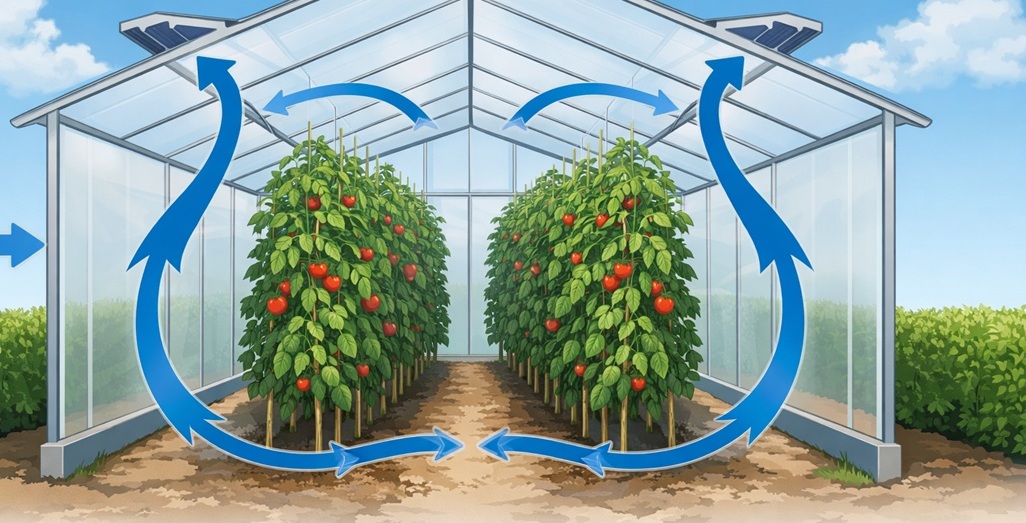
Autumn Challenges: Managing Humidity, Energy Constraints and Crop Balance
A Perfect Storm for Crop Performance
April 7, 2026
Energy Resilience for Greenhouse Horticulture: Electricity at the Core (not just for greenhouse horticulture but NZ Inc?)
Real opportunity for long-term resilience lies in electricity and bioenergy for growers
April 7, 2026
Geothermal Strategy released MBIE
From the Ground Up: A strategy to unlock New Zealand's geothermal potential - March 2026
March 23, 2026
The Carbon Difference Between LNG and Bioenergy: Does it Matter
As domestic gas supply declines and dry-year risks persist, New Zealand faces an important energy question. The challenge is not simply finding a replacement fuel, it is choosing an approach that supports long-term energy security while also reducing our carbon exposure.
March 10, 2026
Energy saving through screens
A combination of screen use, screen quality, greenhouse climate requirements, and greenhouse equipment.
March 10, 2026
Heating Uncertainty Leaves Greenhouse Growers Searching for Answers
Waste oil supply changes force growers to reconsider long-term heating options ahead of winter. Two weeks ago I was alerted that one of the major recycled waste oil suppliers, based in the Auckland region, will soon stop supplying greenhouse growers. For one of my customers this came as a significant shock, particularly given that notice was given that deliveries will cease in the coming months –
CLASSIFIED