
Sign up here to subscribe to the Grower2grower Ezine. Every two weeks you will receive new articles, specific to the protected cropping industry, informing you of industry news and events straight to your inbox.
7
Sep 2026
Sep 2026
Keeping the Door Shut: Are Insect Screens the Next Step in Greenhouse IPM?
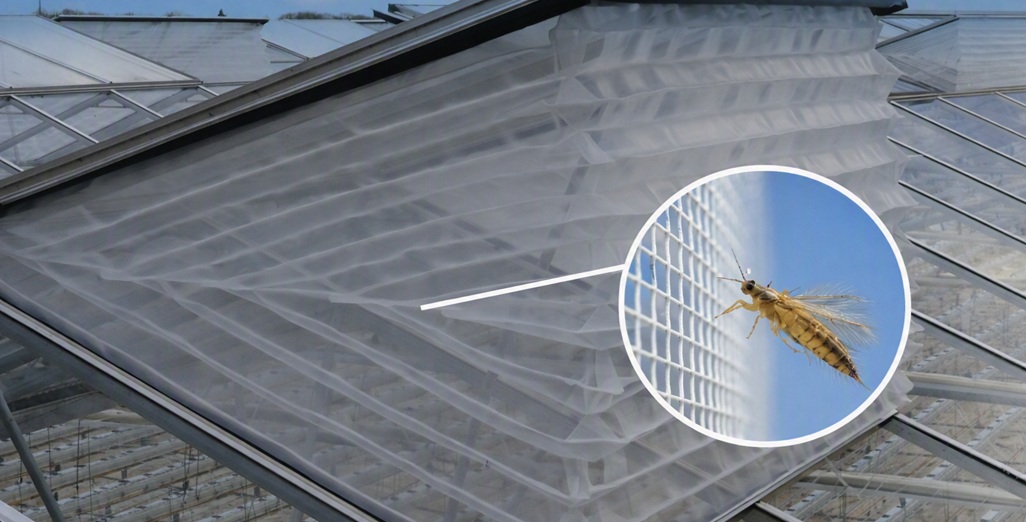
As thrips and other pest pressures continue to increase, it may be time to rethink how we stop pests entering the greenhouse in the first place.
As we head into spring, and following the recent Mini Covered Cropping NZ Conference, one pest issue continues to stand out: the ever-increasing threat posed by thrips.
Thrips are already a significant challenge for growers, and the potential impact on crop health, virus transmission and production targets should not be underestimated. Looking at what is happening internationally only reinforces the point. Two recent articles published by HortDaily, highlighting the problems different thrips species are causing around the world, are well worth reading. (see links below)
The reality is that our pest challenges are not getting any easier. At the same time, growers have limited access to new tools, whether that is new chemistry or new biological products. This makes a well-managed IPM programme more important than ever. But I think we also need to look at the problem from a different angle.
- We spend a lot of time fighting insects once they are inside.
There is nothing wrong with biological control. In fact, I have seen some excellent results in both tomatoes and cucumbers using beneficial insects. Engytatus, for example, has been a superb addition to the toolbox for managing pests such as psyllids and whitefly. But biological control is not a silver bullet. The same applies to biological sprays, drenches and other products. They all have an important role to play, but none of them will work 100% of the time under every growing condition. Establishing and maintaining beneficial insect populations also takes considerable time, planning and money. So perhaps we need to put more emphasis on preventing the pest from getting into the greenhouse in the first place.
- Keep the door shut
I often explain pest exclusion using a simple analogy. If you don’t want a burglar coming into your house, you lock the door. Greenhouses, however, are almost the opposite. To many pest insects, a modern glasshouse must look like their dream home. There is warmth, shelter, abundant food, perfectly fertilised plants and a relatively protected environment. You could almost put a sign outside saying:
“Come in – you’ll love it in here!”
And, in many cases, we actually do invite them in. The problem is that we need ventilation. We need to remove excess heat and moisture and bring in cooler, drier outside air. So we open the vents – and unfortunately, the insects can come through those same openings. Of course, ventilation is essential. We cannot simply close the greenhouse and expect the crop to perform. But perhaps modern greenhouse technology gives us more options than we have traditionally considered.
- Should insect screens be taken more seriously?
I have written about insect screens before, but I am becoming increasingly convinced that they deserve much more serious consideration as part of greenhouse design. The objective isn’t to eliminate pests completely. That is unrealistic. The objective is to (vastly) reduce the number of pests entering the greenhouse, making the job of our biological control programme considerably easier.
If we can prevent a significant proportion of thrips, whitefly and other small flying pests from entering, we are giving our beneficial insects a much better opportunity to stay ahead of the pest population. That could also reduce the reliance on corrective spraying and the considerable costs associated with repeatedly trying to regain control of an established pest population.
- But there are trade-offs
There are some very important questions that need to be answered before simply putting screens over every ventilation opening. Airflow is probably the biggest consideration. A screen creates resistance to air movement, so the greenhouse ventilation capacity needs to be properly understood. Higher internal temperatures, reduced natural ventilation and the potential need for fans or other ventilation systems all need to be considered. (talk to your greenhouse builder about this)
There is also the question of light transmission. Any reduction in light reaching the crop needs to be weighed against the potential benefit of excluding pests. And, ultimately, there is the cost. But perhaps the question shouldn’t simply be “What does the screen cost?” It should be: “What does it currently cost us not to have one?”
Consider the cost of beneficial insects, monitoring, labour, corrective treatments, crop damage, virus risk and lost production. Add to that the increasing difficulty of accessing new pest-control tools, and the economics of exclusion may start to look very different.
- Prevention has to become a bigger part of IPM
I don’t believe insect screens will replace biological control. Quite the opposite. I see them as another layer of protection that can make the rest of the IPM programme more effective. The future of pest management in protected cropping is unlikely to be based on finding one perfect product or one perfect biological control agent. It is going to require multiple layers of protection working together. Exclude where we can. Monitor continuously. Establish beneficials early. Act quickly when pests are detected, and perhaps most importantly, don’t make the beneficial insects fight a battle that we could have prevented in the first place.
With advances in greenhouse design, automation, fans and controlled ventilation systems – along with the increasing pressure from thrips and other pest insects – I think it is time we looked again at insect exclusion screens. They won’t keep every pest out. However, if we can keep more of them out, perhaps we can make the pests that do get inside a much easier problem to manage.
What do you think? Email – stefan@grower2grower.co.nz
See relatable articles below:
CLASSIFIED













Photo
Gallery





Subscribe to our E-Zine
More
From This Category
September 7, 2026
Keeping the Door Shut: Are Insect Screens the Next Step in Greenhouse IPM?
As thrips and other pest pressures continue to increase, it may be time to rethink how we stop pests entering the greenhouse in the first place. As we head into spring, and following the recent Mini Covered Cropping NZ Conference, one pest issue continues to stand out: the ever-increasing threat posed by thrips.
August 25, 2026
EPA seeks feedback about treated seed
The Environmental Protection Authority (EPA) is asking for feedback on a proposed group standard for treated seed.
June 2, 2025
Australia officially abandons eradication response of ToBRFV (What this means for New Zealand)
The (Aus) horticulture industry, government and other industry stakeholders will work together to determine an appropriate long-term management strategy and trade protocol for ToBRFV.

May 20, 2025
Protected Cropping Australia respond to continued Australian Government ‘Mandatory Eradication Response’ to ToBRFV
Tomato growers on red alert for tomato brown rugose fruit virus: A cure worse than the disease
May 19, 2025
Tomato brown rugose fruit virus detected in Victoria ( Australia update)
On 11 May there was another detection of the virus in seedlings planted in a decontaminated glasshouse as a part of return to business aligned with the National ToBRFV Response Plan.

May 6, 2025
(ToBRFV) Will Australian Governments Soften Their Biosecurity Stance? Why is this a Concern for NZ Growers?
Industry Working Together to Protect New Zealand Tomato Growers and Workers
CLASSIFIED