

Sign up here to subscribe to the Grower2grower Ezine. Every two weeks you will receive new articles, specific to the protected cropping industry, informing you of industry news and events straight to your inbox.
19
May 2026
May 2026
Demystifying stone wool for strawberry cultivation
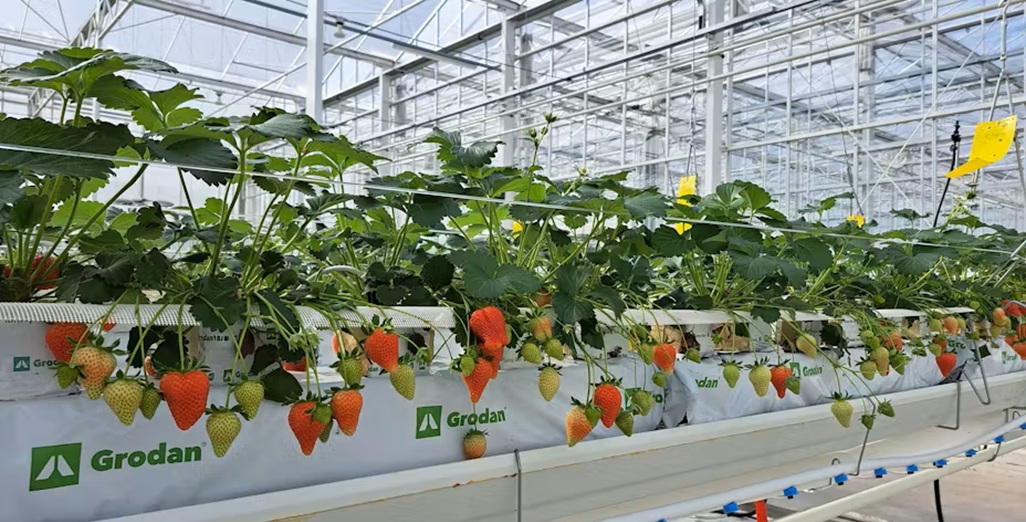
“Stone wool can make it easier for growers to face some of the current challenges”
There is mounting evidence that stone wool offers clear benefits for strawberry growers in high-tech greenhouse environments. But how easy is it to achieve those benefits in practice? And what are the biggest challenges? We asked Vera Theelen, Researcher Soft Fruit at the Delphy Innovative Soft Fruit Centre (ISFC), to share details of her own experiences.
How long have you been using stone wool in practice?
I’ve been using stone wool in practice since late autumn 2022, when we launched a larger-scale research trial on stone wool together with Grodan. That started with propagating fresh unlighted everbearers on blocks, and then we transplanted them onto slabs in the production compartment in mid-December. The aim was to investigate the impact of different EC levels on plant development, growth, energy balance, production levels and quality. The trial initially ran for one year, but after one year Grodan decided to continue growing on stone wool.
What were your expectations beforehand?
For crops such as tomatoes, stone wool is proven to achieve benefits such as speed, steerability and yield, as well as cleanliness and hygiene in support of minimising disease pressure. In recent years, the existing knowledge and experience related to those crops has been applied in high-tech strawberry cultivation too. Some growers are reporting positive results. But as a researcher, I don’t tend to believe anything until I’ve tried it for myself! So I was excited to start from scratch and approach this trial with an open mind, based on a scientific and fact-based approach.
What has been your experience with growing strawberries on stone wool so far?
One thing that struck me was how easy it was to prepare the greenhouse compartment at the start of the trial. Rather than having to dig a hole, insert each plant and cover it again, we could simply saturate the slabs and place the blocks from the cart onto the slabs. This enabled us to work cleanly and quickly; it took three of us less than an hour to transplant over 900 plants, so I can imagine that the labour savings could add up in the case of larger-scale operations.
Another benefit of using stone wool is that, it is a pathogen-free medium with no cation exchange capacity. This can contribute to minimising disease pressure and reducing the need to spray against Phytophthora, for instance. Additionally, because stone wool doesn’t have a buffering aspect, it gives you more control over steering since all the nutrients are directly available to the plant.
Importantly, stone wool supports the use of sensors to measure and monitor values such as the EC, the temperature inside the slab and of course the water content (WC%) in real time throughout the entire cycle. It’s easy to log in to see this data, and we also receive automatic notifications if any values drop below the predefined level. This enables us to take fast action to manage the root zone environment and create the right conditions for optimal nutrient uptake.
In terms of the quality and yield, the plants remained quite healthy throughout the whole cycle and we were satisfied with the production levels at the end of the first year.
How much support have you received from Grodan?
I maintain close contact with Grodan to share feedback on how the strawberry crop is behaving on the stone wool in response to the various values such as nutrients, pH, EC and WC%. For example, we have short weekly online meetings to discuss the progress and next steps based on Grodan’s six-phase model for the cultivation process. Additionally, whenever I see anything I’m unsure about, I can always reach out to the Grodan specialists.
This has resulted in a continuous learning experience for me personally, plus it’s very rewarding to be contributing to fundamental research for strawberries. I hope this will enable Grodan to further tailor its growing media for strawberries, and also to continue to optimise the irrigation strategy and advice for strawberry growers.
What is your overall conclusion about the use of stone wool in commercial strawberry cultivation?
I’ve noticed that a lot of strawberry growers are very interested in our trial, so they are clearly thinking about the future opportunities. In a high-tech indoor environment, and especially when used in combination with sensors, stone wool can make it easier for growers to face some of the current challenges such as the rising costs and shortage of labour. Against the backdrop of ever-tighter restrictions on the use of crop protection agents, a soilless system can reduce the disease pressure. Moreover, stone wool for commercial strawberry cultivation allows growers to produce a high-value crop nearly all year round, which can be good for business.
However, strawberry growers who are considering making the switch need to bear in mind that stone wool requires a different approach. You can’t just use the same irrigation and nutrition strategy as with traditional growing media. But if growers are prepared to embark on a learning curve, supported by expert insights and advice, we’ve shown that it’s possible to achieve strong, healthy plants, good production levels and great-tasting strawberries using stone wool.
Source: Demystifying stone wool for strawberry cultivation
CLASSIFIED
















Photo
Gallery





Subscribe to our E-Zine
More
From This Category
May 19, 2026
Demystifying stone wool for strawberry cultivation
“Stone wool can make it easier for growers to face some of the current challenges”
May 5, 2026
Turn sunshine into synergy and unlock higher yields year-round
How LED intercanopy lighting complements high radiation and transforms greenhouse production
May 5, 2026
Innovation In Strawberry Production in New Zealand
Propagation in a controlled environment (plant factory) will eventually offer the potential to control plant development when planted out.
April 20, 2026
Autumn Challenges: Managing Humidity, Energy Constraints and Crop Balance
A Perfect Storm for Crop Performance
April 7, 2026
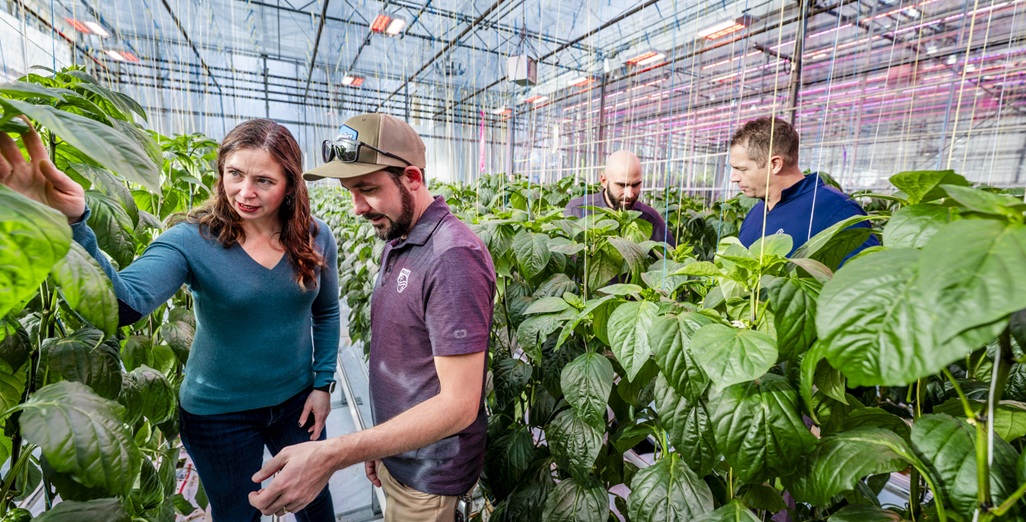
Signify and University of British Columbia collaborate to further explore feasibility of sustainable year-round greenhouse pepper production
Trial paves the way for growers to capitalize on the market opportunity to provide locally grown bell peppers during the winter months.
April 7, 2026
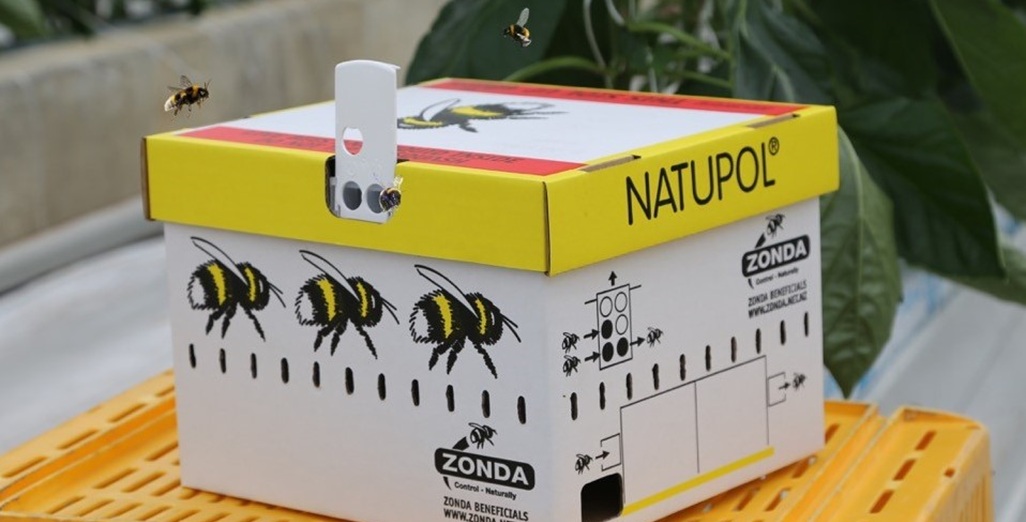
Think It’s the Bees? Think Again
Proven Hive Performance Suggests Auckland’s Climate and Crop Conditions Are the Key Limiters. Every year, Zonda receives calls from growers saying “the bees aren’t working” and requesting new hives. While hives are sometimes replaced, these cases consistently show that the bumblebees are performing as expected. The real challenge? Humidity, Auckland weather, and plant conditions.
CLASSIFIED